Accession Data:
Allium cepa L.
subg. Cepa sect. Cepa
- Common Name:
- Family: Amaryllidaceae J. St-Hil.
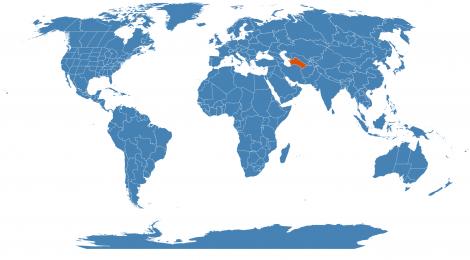
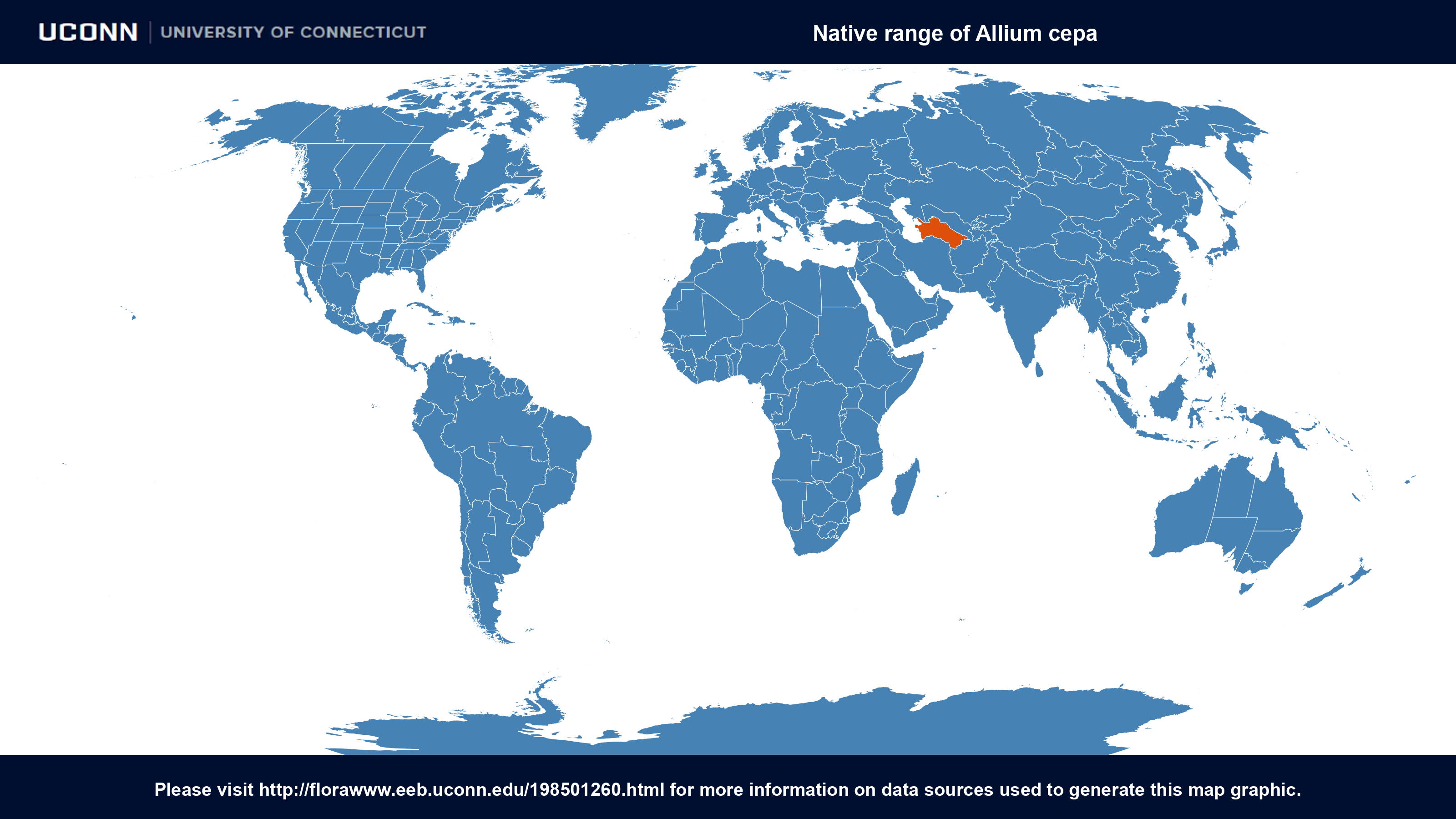
- Country of Origin: known only in cultivation, but wild relatives from central Asia
- Description: (Proliferum group)
A perennial that produces onions. It has a variety of uses. People use it in the house to prevent mildew. Doctors recommend the onion for some vitamins and to arose the appetite, but Allium cepa is commonly known for its culinary purposes. (salads and flavoring). The Proliferum group produces bulbils in the inflorescence which is one common way of propagating these plants.
The other two groups of A. Cepa are the Cepa group in which single onions are produced with no bulbils in the inflorescence (common onions) and the Aggregatum group which does not produce bulbils but produces lateral bulbs (Shallots)
- Uses: Although rarely used specifically as a medicinal herb, the onion has a wide range of beneficial actions on the body and when eaten (especially raw) on a regular basis will promote the general health of the body. The bulb is anthelmintic, anti-inflammatory, antiseptic, antispasmodic, carminative, diuretic, expectorant, febrifuge, hypoglycaemic, hypotensive, lithontripic, stomachic and tonic[4, 7, 21]. When used regularly in the diet it offsets tendencies towards angina, arteriosclerosis and heart attack[254]. It is also useful in preventing oral infection and tooth decay[254]. Baked onions can be used as a poultice to remove pus from sores[254]. Fresh onion juice is a very useful first aid treatment for bee and wasp stings, bites, grazes or fungal skin complaints[7, 201]. When warmed the juice can be dropped into the ear to treat earache[254]. It also aids the formation of scar tissue on wounds, thus speeding up the healing process, and has been used as a cosmetic to remove freckles[7]. Bulbs of red cultivars are harvested when mature in the summer and used to make a homeopathic remedy[232]. This is used particularly in the treatment of people whose symptoms include running eyes and nose[232]. The German Commission E Monographs, a therapeutic guide to herbal medicine, approve Allium cepa Onion for appetite loss, arteriosclerosis, dyspeptic complaints, fevers & colds, cough/bronchitis, hypertension, tendency to infection, inflammation of mouth and pharynx, common cold (see [302] for critics of commission E). (taken directly from Plants For A Future)
Accession Data:
- Accession # 198501260
- Source: Unknown
- Accession Date: 12-31-1985
- Bench: 3311 - NEOB: Cycads
- Currently: active - needs attention
- Qty: 3 confirmed on 09-25-2018
Classification:
- Division: Magnoliophyta
- Class: Liliopsida
- SubClass: monocots
- Order: Asparagales
- SubOrder:
- Family: Amaryllidaceae
- SubFamily: Allioideae
- Tribe: Allieae
- SubTribe:
References (internal):
- EEB Greenhouse Holdings native to: Turkmenistan /
References (external):
- The Plant List (2013). Version 1.1. Last accessed on Thursday, March 10, 2016.
- WCSP (2016). World Checklist of Selected Plant Families. Facilitated by the Royal Botanic Gardens, Kew. Last accessed on Thursday, March 10, 2016.
data regenerated on Mon, 12 Nov 2018 15:39:38 -0500 [bcm v4.0]
Images:
Additional images for this accession:
Click on thumbnails to enlargeCurrent Accessions in the Amaryllidaceae
Subfamily Agapanthoideae
Subfamily Allioideae
Tribe Allieae
Subfamily Allioideae
Tribe Tulbaghieae
Subfamily Amaryllidoideae
Tribe Amaryllideae
- Crininae: Crinum asiaticum


- Crininae: Crinum moorei
- Strumariinae: Brunsvigia striata W/C
- Strumariinae: Nerine krigei W/C
- Strumariinae: Nerine laticoma W/C
- Strumariinae: Nerine masonorum W/C
- Strumariinae: Nerine rehmannii
- Strumariinae: Strumaria sp. W/C
Subfamily Amaryllidoideae
Tribe Cyrtantheae
Subfamily Amaryllidoideae
Tribe Galantheae
Subfamily Amaryllidoideae
Tribe Griffineae
Subfamily Amaryllidoideae
Tribe Haemantheae
- Clivia miniata
- Clivia miniata var. citrina 'Sir John Thouron'
- Haemanthus albiflos

- Haemanthus humilis W/C
- Scadoxus multiflorus ssp. Katherinae
- Scadoxus puniceus
Subfamily Amaryllidoideae
Tribe Hippeastreae
- Hippeastrinae: Hippeastrum calyptratum
- Hippeastrinae: Hippeastrum hybrid
- Hippeastrinae: Hippeastrum idimae
- Hippeastrinae: Hippeastrum mandonii
- Hippeastrinae: Rhodophiala bifida
- Zephyranthinae: Habranthus robustus
- Zephyranthinae: Habranthus sp.
- Zephyranthinae: Sprekelia formosissima
- Zephyranthinae: Zephyranthes candida
- Zephyranthinae: Zephyranthes minima
- Zephyranthinae: Zephyranthes rosea
Subfamily Amaryllidoideae
Tribe Hymenocallideae
Subfamily Amaryllidoideae
Tribe Lycorideae
Subfamily Amaryllidoideae
Tribe Narcisseae
Subfamily Amaryllidoideae
Tribe Pancratieae
Subfamily Amaryllidoideae
Tribe Stenomesseae
W/C = Wild Collected
 = indicates flowering in past 14 days
= images available for this accession
= map available for this accession
= indicates flowering in past 14 days
= images available for this accession
= map available for this accession
 = accession added within past 90 days