Accession Data:
Tetradenia riparia (Hochst.) Codd
- Common Name: Nutmeg Bush, Mochasma
- Family: Lamiaceae Lindl.
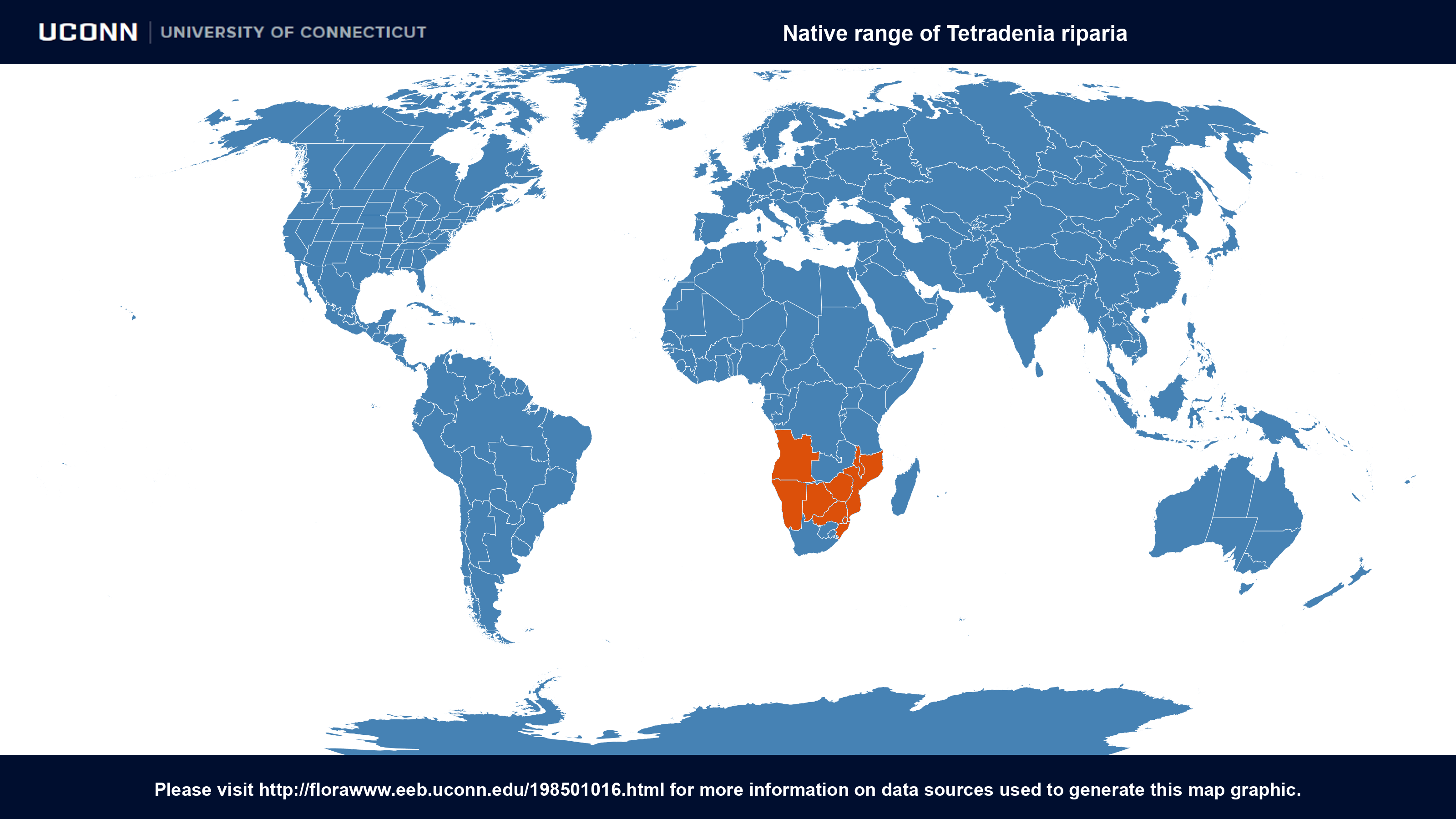
- Country of Origin: S. Trop. & S. Africa
- Description: [syn. Iboza riparia (Hochst.) N.E. Br.]
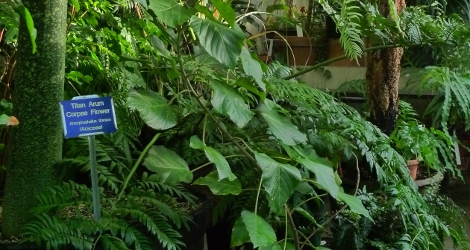
Stout dioecious herb, 3-6 feet tall, white-pubescent, aromatic; leaves broadly ovate, 4-6 inches long, to 5 inches wide, slightly to deeply crenate, petioled; panicle mostly 8-15 inches long; calyx to 1/16 inch long, corolla unequally 4-5 lobed, to 3/16 inch long, white.
- Uses: Medicinal: Moderate antimalarial activity of the leaf essential oil against two strains of Plasmodium falciparum has been reported 7. The diterpene diol 8 (14), 15-sandaracopimaradiene-7α,18-diol has been shown to possess papaverine-like antispasmodic activity on methacholine, histamine and barium chloride-induced contractions of guinea pig ileum as well as on noradrenaline-induced contractions of rabbit aorta 3. Leaf extracts (80% ethanol), tested for antimicrobial and antiviral activity, inhibited the growth of Staphylococcus aureus, Candida albicans, Mycobacterium smegmatis, Microsporum canis, Trichophyton mentagrophytes and Bacillus subtilis. No antiviral activity against Coxsackie virus, poliovirus (unspecified), measles virus and Semliki-Forest virus was demonstrated in these studies8, 9. Some of the observed antimicrobial activity has been attributed to the presence of diterpenes10, .3
- Culture: Moderately to marginally frost hardy, they prefer light, well-drained loam, and do not put up with prolonged dry conditions. Plant in full sun and provide plenty of water in summer, with protection from strong winds. They can be pruned hard each year after the flowers are spent. Propagate from cuttings in spring.
- USDA Zone: 10-11
Accession Data:
- Accession # 198501016
- Source: Unknown
- Accession Date: 12-31-1985
- Bench: 1114 - AFR:East Bench SC
- Currently: active - healthy
- Qty: 2 confirmed on 05-24-2025
Classification:
- Division: Magnoliophyta
- Class: Magnoliopsida
- SubClass: euasterid I
- Order: Lamiales
- SubOrder:
- Family: Lamiaceae
- SubFamily: Nepetoideae
- Tribe: Ocimeae
- SubTribe: Plectranthinae
Flowering Data:
This accession has been observed in bloom on:| Year | Jan | Feb | Mar | Apr | May | Jun | Jul | Aug | Sep | Oct | Nov | Dec | ||||||||||||||||||||||||||||||||||||||||
|---|---|---|---|---|---|---|---|---|---|---|---|---|---|---|---|---|---|---|---|---|---|---|---|---|---|---|---|---|---|---|---|---|---|---|---|---|---|---|---|---|---|---|---|---|---|---|---|---|---|---|---|---|
| 2025 | ||||||||||||||||||||||||||||||||||||||||||||||||||||
| 2024 | ||||||||||||||||||||||||||||||||||||||||||||||||||||
| 2023 | ||||||||||||||||||||||||||||||||||||||||||||||||||||
| 2022 | ||||||||||||||||||||||||||||||||||||||||||||||||||||
| 2021 | ||||||||||||||||||||||||||||||||||||||||||||||||||||
| 2020 | ||||||||||||||||||||||||||||||||||||||||||||||||||||
| 2019 | ||||||||||||||||||||||||||||||||||||||||||||||||||||
| 2018 | ||||||||||||||||||||||||||||||||||||||||||||||||||||
| 2017 | ||||||||||||||||||||||||||||||||||||||||||||||||||||
| 2016 | ||||||||||||||||||||||||||||||||||||||||||||||||||||
| 2015 | ||||||||||||||||||||||||||||||||||||||||||||||||||||
| 2014 | ||||||||||||||||||||||||||||||||||||||||||||||||||||
| 2013 | ||||||||||||||||||||||||||||||||||||||||||||||||||||
| 2012 | ||||||||||||||||||||||||||||||||||||||||||||||||||||
| 2011 | ||||||||||||||||||||||||||||||||||||||||||||||||||||
| 2010 | ||||||||||||||||||||||||||||||||||||||||||||||||||||
| 2009 | ||||||||||||||||||||||||||||||||||||||||||||||||||||
| 2008 | ||||||||||||||||||||||||||||||||||||||||||||||||||||
References (internal):
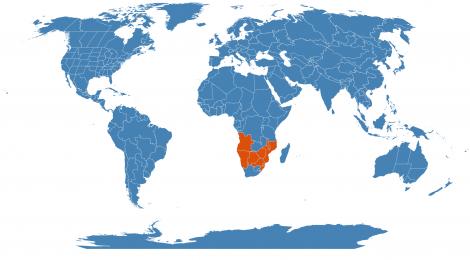
- EEB Greenhouse Holdings native to: Angola / Malawi / Mozambique / Zimbabwe / Botswana / Namibia / KwaZulu-Natal / Swaziland / Northern Provinces
References (external):
- Hortus Third, LH Bailey Hortorium, 1976
- Botanica, Turner & Wasson, 1997, CD-ROM Version
- Scott, G. and Springfield, E.P. (2004). Pharmaceutical monographs for 60 South African plant species used as traditional medicines. South African National Biodversity Institute (SANBI) Plant Information Website
- The Plant List (2013). Version 1.1. Accessed 20 May 2015.
- WCSP (2015). World Checklist of Selected Plant Families. Facilitated by the Royal Botanic Gardens, Kew. Accessed 20 May 2015
data regenerated on Sat, 24 May 2025 13:27:07 -0400 [bcm v4.0]
Images:
Additional images for this accession:
Click on thumbnails to enlargeCurrent Accessions in the Lamiaceae
Subfamily Ajugoideae
- Clerodendrum nutans


- Clerodendrum speciosissimum
- Clerodendrum thomsoniae
- Faradaya splendida
- Petraeovitex bambusetorum
- Teucrium chamaedrys
- Teucrium fruticans
Subfamily Lamioideae
Tribe Pogostemoneae
Subfamily Lamioideae
Tribe Stachydeae
Subfamily Nepetoideae
Tribe Mentheae
- Lycopinae: Lycopus europaeus
- Menthinae: Thymus kotschyanus
- Prunellinae: Prunella grandiflora
- Salviinae: Rosmarinus officinalis
- Salviinae: Salvia discolor
- Salviinae: Salvia microphylla
- Salviinae: Salvia officinalis
- Salviinae: Salvia pinguifolia
Subfamily Nepetoideae
Tribe Ocimeae
- Lavandulinae: Lavandula angustifolia
- Lavandulinae: Lavandula dentata
- Ociminae: Ocimum tenuiflorum
- Plectranthinae: Coleus scutellarioides
- Plectranthinae: Coleus scutellarioides
- Plectranthinae: Plectranthus amboinicus
- Plectranthinae: Plectranthus neochilus
- Plectranthinae: Plectranthus saccatus
- Plectranthinae: Tetradenia riparia
Subfamily Prostantheroideae
Tribe Westringieae
Subfamily Scutellarioideae
- Holmskioldia sanguinea
- Scutellaria alpina
- Scutellaria argentata
- Scutellaria javanica
- Scutellaria purpurascens subsp. verecunda W/C
- Scutellaria tuberosa W/C
Subfamily Symphorematoideae
Subfamily Viticoideae
W/C = Wild Collected = indicates flowering in past 14 days
= images available for this accession
= map available for this accession
= indicates flowering in past 14 days
= images available for this accession
= map available for this accession
 = accession added within past 90 days