Accession Data:
Combretum molle R.Br. ex G.Don
- Common Name: Velvet Bush Willow
- Family: Combretaceae R. Br.
- Country of Origin: Africa
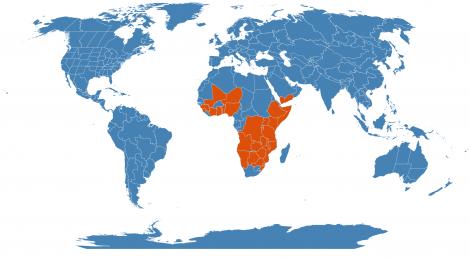
- Habitat: bush and savannah regions, often occurring on ant-hills
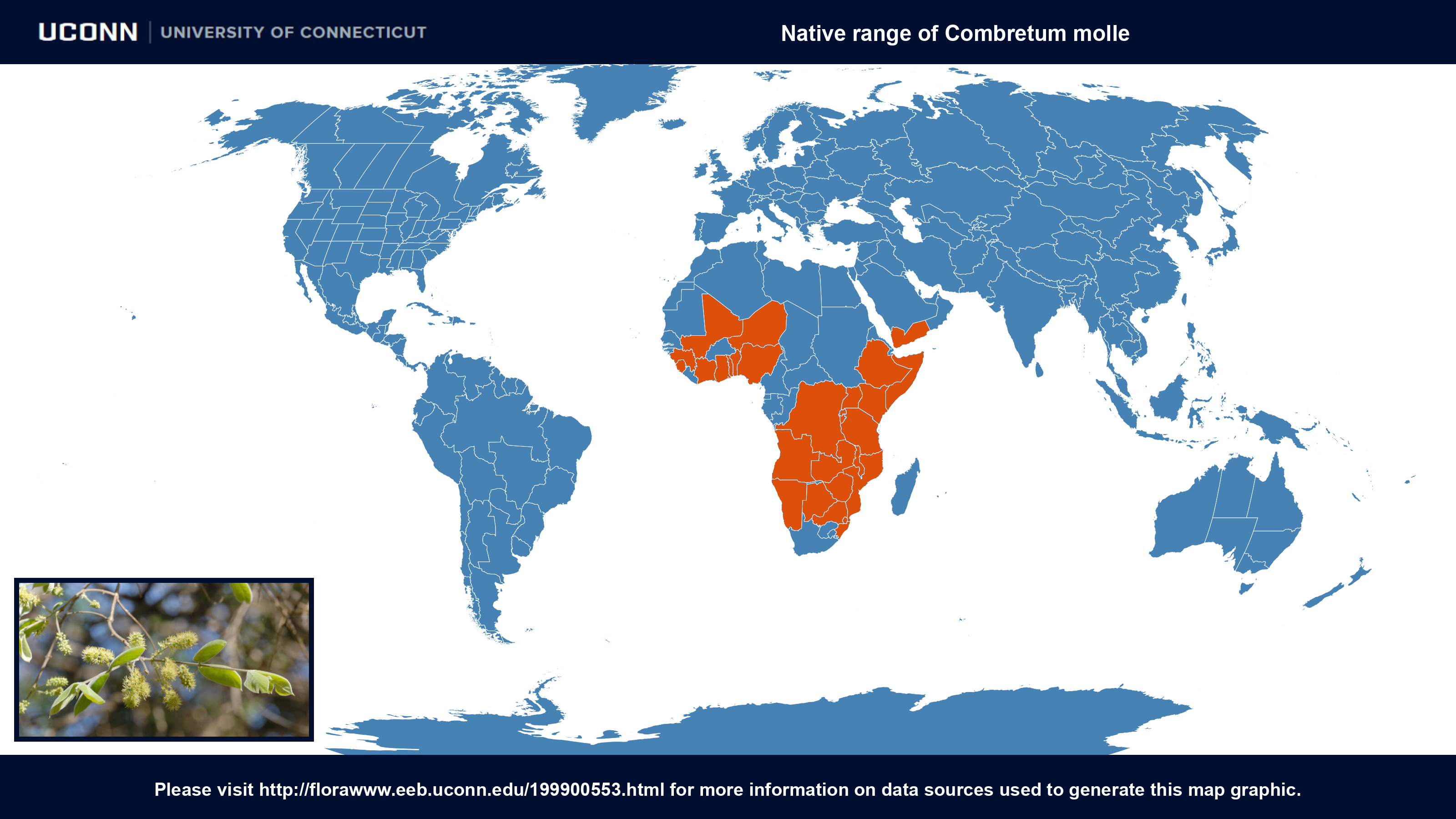
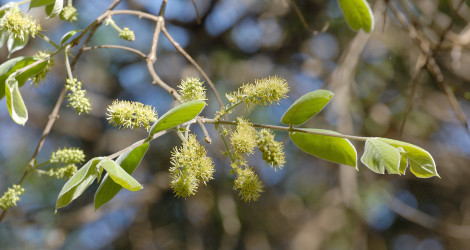
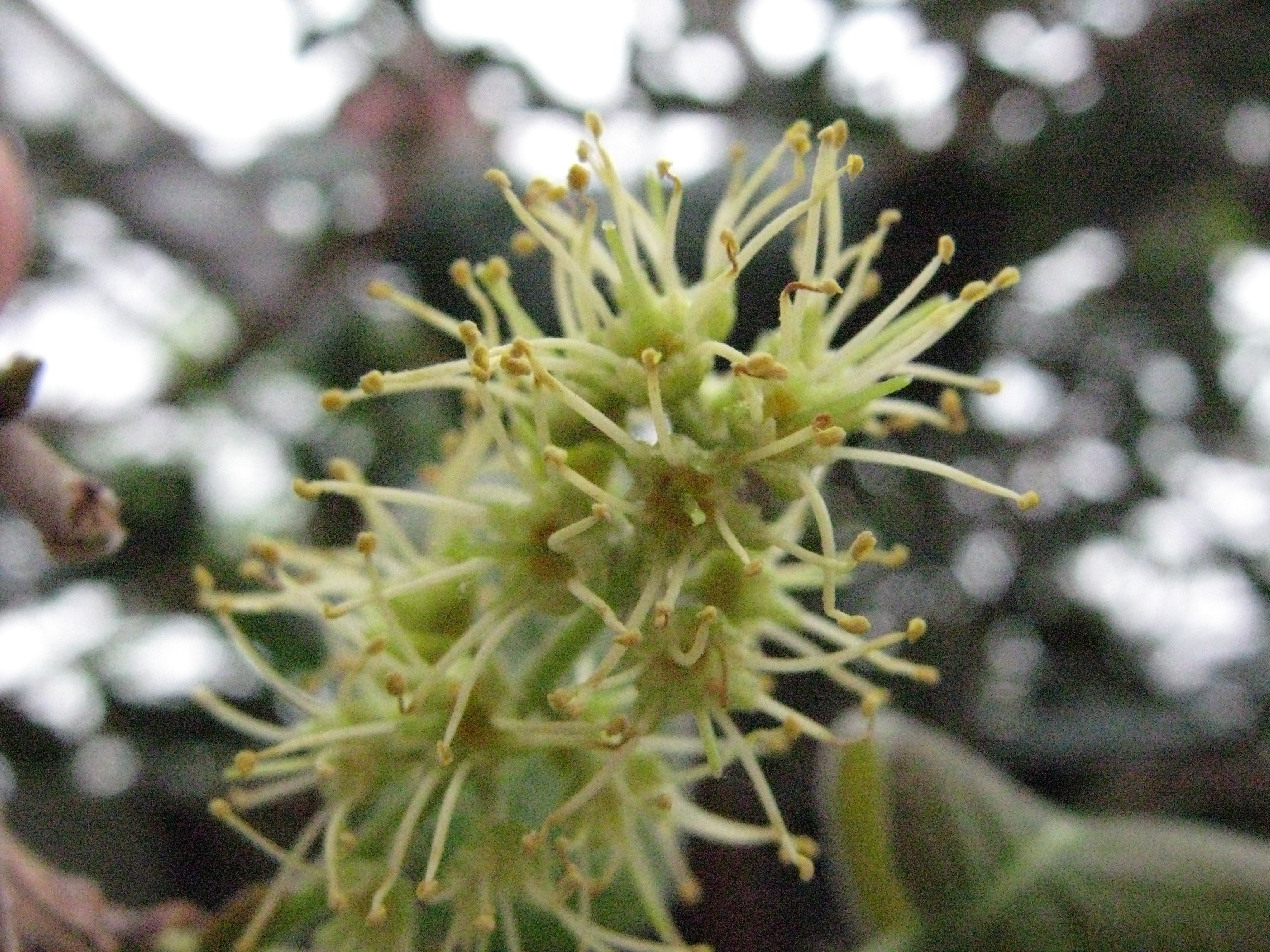
- Description: Combretum molle is a shrub or small, graceful, deciduous tree 3-13 m high; trunk crooked or leaning, occasionally swollen at the base, up to 30 cm in diameter. Bark grey and smooth when young, grey-brown to almost black, rough and flaking when older, twigs often with reddish hairs. Branching heavy and drooping, giving a rounded or flat-rounded, sometimes oval, crown. It may be evergreen or deciduous and yields a gum. Leaves opposite, simple, leathery, 5-17 cm long, 2.5-9 cm wide, narrowly elliptic, broadly ovate-elliptic to almost circular, with dense, grey, velvety hairs on both sides, especially below; some forms almost without hairs; margins untoothed; apex tapering, often with a short point or sometimes notched; base round, heart-shaped or slightly narrowed; divided by midrib into 2 unequal parts; margin entire; petiole thickset, 2-3 mm long; net-veining conspicuous, especially on the under surface. Individual flowers small, on bare branches; pale cream or greenish-yellow, sometimes with a reddish tinge; heavily scented, borne singly in the axils of the leaves; in dense, axillary, often branched spikes, 4-9 cm long. The short-stalked flowers are borne on a central stalk 3-7 cm long. Bracts present. Fruits 1.4-2 (max. 2.5) x 1.5-2 cm; yellowish-green flushed with red, drying to golden reddish-brown; borne abundantly, some old fruits remaining on the tree into the next flowering season; 4-winged, the wings pale yellow-brown, rounded, with shallow notches at top and bottom. Combretum was the name given by Pliny to a particular climbing plant, the identity of which has been lost in time. The specific name is the Latin word ‘mollis’, meaning ‘soft’, presumably because of the softness of the leaves.
It is a tree of the bush and savannah regions of Africa generally, often occurring on ant-hills, in semi-evergreen thickets and frequently associated with quartzite formations.
- Uses:
- MEDICINE: A root decoction is use to treat abdominal pains and sterility (Chhabra et al. 1984). It is used to treat hookworms, stomach pains, snakebites, leprosy fever, and general body swelling (Rulangaranga 1989). It is regarded as a medicine for both humans and animals. African remedies use this plant to treat guinea worm and treat the body of wounds, abscesses and many kinds of parasitic diseases.
- BEE PLANT: The sweetly scented flowers attract insects including honey bees.
- GENERAL PURPOSE WOOD The wood is hard and used as building posts, poles, tool handles, and in construction. It is also termite resistant.
- IMPORTANT NOTE: Plant Uses are for informational purposes only. EEB Greenhouses assume no responsibility for adverse effects from the use of any plants referred to on this site. Always seek advice from a professional before using any plant medicinally.
- Culture: Well drained soils in forests. Slow growing, tolerates lopping and coppicing. Propagation by fresh seed or root suckers.
Accession Data:
- Accession # 199900553
- Source: Lisa Palmer - Dartmouth
- Accession Date: 09-30-1999
- Bench: 1105 - AFR:Ground Bed 1 NW
- Currently: active - healthy
- Qty: 1 confirmed on 02-26-2025
Classification:
- Division: Magnoliophyta
- Class: Magnoliopsida
- SubClass: rosids
- Order: Myrtales
- SubOrder:
- Family: Combretaceae
- SubFamily: Combretoideae
- Tribe: Combreteae
- SubTribe: Combretinae
Flowering Data:
This accession has been observed in bloom on:| Year | Jan | Feb | Mar | Apr | May | Jun | Jul | Aug | Sep | Oct | Nov | Dec | ||||||||||||||||||||||||||||||||||||||||
|---|---|---|---|---|---|---|---|---|---|---|---|---|---|---|---|---|---|---|---|---|---|---|---|---|---|---|---|---|---|---|---|---|---|---|---|---|---|---|---|---|---|---|---|---|---|---|---|---|---|---|---|---|
| 2025 | ||||||||||||||||||||||||||||||||||||||||||||||||||||
| 2024 | ||||||||||||||||||||||||||||||||||||||||||||||||||||
| 2023 | ||||||||||||||||||||||||||||||||||||||||||||||||||||
| 2022 | ||||||||||||||||||||||||||||||||||||||||||||||||||||
| 2021 | ||||||||||||||||||||||||||||||||||||||||||||||||||||
| 2020 | ||||||||||||||||||||||||||||||||||||||||||||||||||||
| 2019 | ||||||||||||||||||||||||||||||||||||||||||||||||||||
| 2018 | ||||||||||||||||||||||||||||||||||||||||||||||||||||
| 2017 | ||||||||||||||||||||||||||||||||||||||||||||||||||||
| 2016 | ||||||||||||||||||||||||||||||||||||||||||||||||||||
| 2015 | ||||||||||||||||||||||||||||||||||||||||||||||||||||
| 2014 | ||||||||||||||||||||||||||||||||||||||||||||||||||||
| 2013 | ||||||||||||||||||||||||||||||||||||||||||||||||||||
| 2012 | ||||||||||||||||||||||||||||||||||||||||||||||||||||
| 2011 | ||||||||||||||||||||||||||||||||||||||||||||||||||||
| 2010 | ||||||||||||||||||||||||||||||||||||||||||||||||||||
| 2009 | ||||||||||||||||||||||||||||||||||||||||||||||||||||
| 2008 | ||||||||||||||||||||||||||||||||||||||||||||||||||||
References (internal):
- EEB Greenhouse Holdings native to: Benin / Ivory Coast / Ghana / Guinea / Mali / Nigeria / Niger / Sierra Leone / Togo / Burundi / Rwanda / Zaire / Ethiopia / Somalia / Kenya / Tanzania / Uganda / Angola / Malawi / Mozambique / Zambia / Zimbabwe / Botswana / Namibia / KwaZulu-Natal / Swaziland / Northern Provinces / Yemen
References (external):
- AgroForestryTree database. Accessed 31March2008.
- The Plant List (2013). Version 1.1. Last accessed on Saturday, January 28, 2017.
- Combretum molle at ARS-GRIN. Last accessed on Saturday, January 28, 2017.
- Combretum molle at FAO. Last accessed Wednesday, 31 October, 2018
- Iwu M., Maurice. Handbook of African Medicinal Plants. Boca Raton, Florida, CRC Press, 1993.
- Images #00 (cropped) & #01 (original) By Dr. Johann C. Knobel [GFDL or CC BY-SA 3.0 ], from Wikimedia Commons. Last accessed Wednesday, 07 November, 2018.

data regenerated on Wed, 26 Feb 2025 11:27:05 -0500 [bcm v4.0]
Images:
Additional images for this accession:
Click on thumbnails to enlarge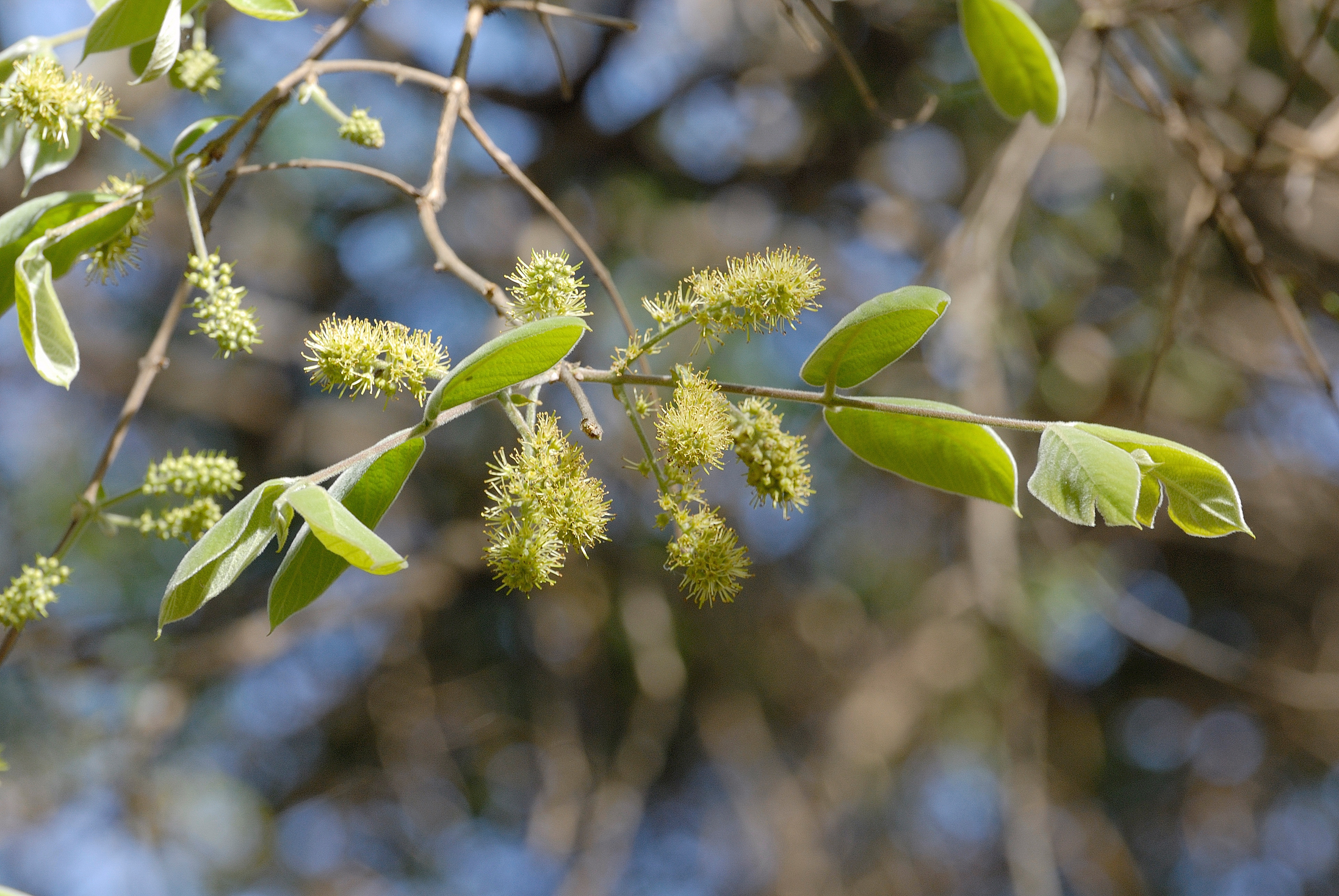
Current Accessions in the Combretaceae
Subfamily Combretoideae
Tribe Combreteae
- Combretinae: Combretum molle


 = indicates flowering in past 14 days
= images available for this accession
= map available for this accession
= indicates flowering in past 14 days
= images available for this accession
= map available for this accession
 = accession added within past 90 days