Accession Data:
Acmella oleracea (L.) R.K.Jansen
- Common Name: Toothache Plant
- Family: Asteraceae Giseke
- Synonym(s): Spilanthes oleracea L.
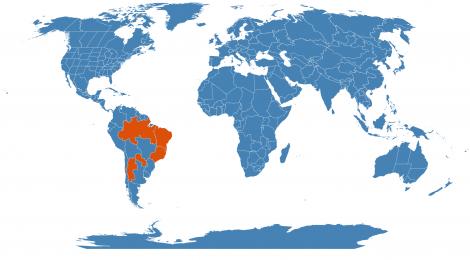
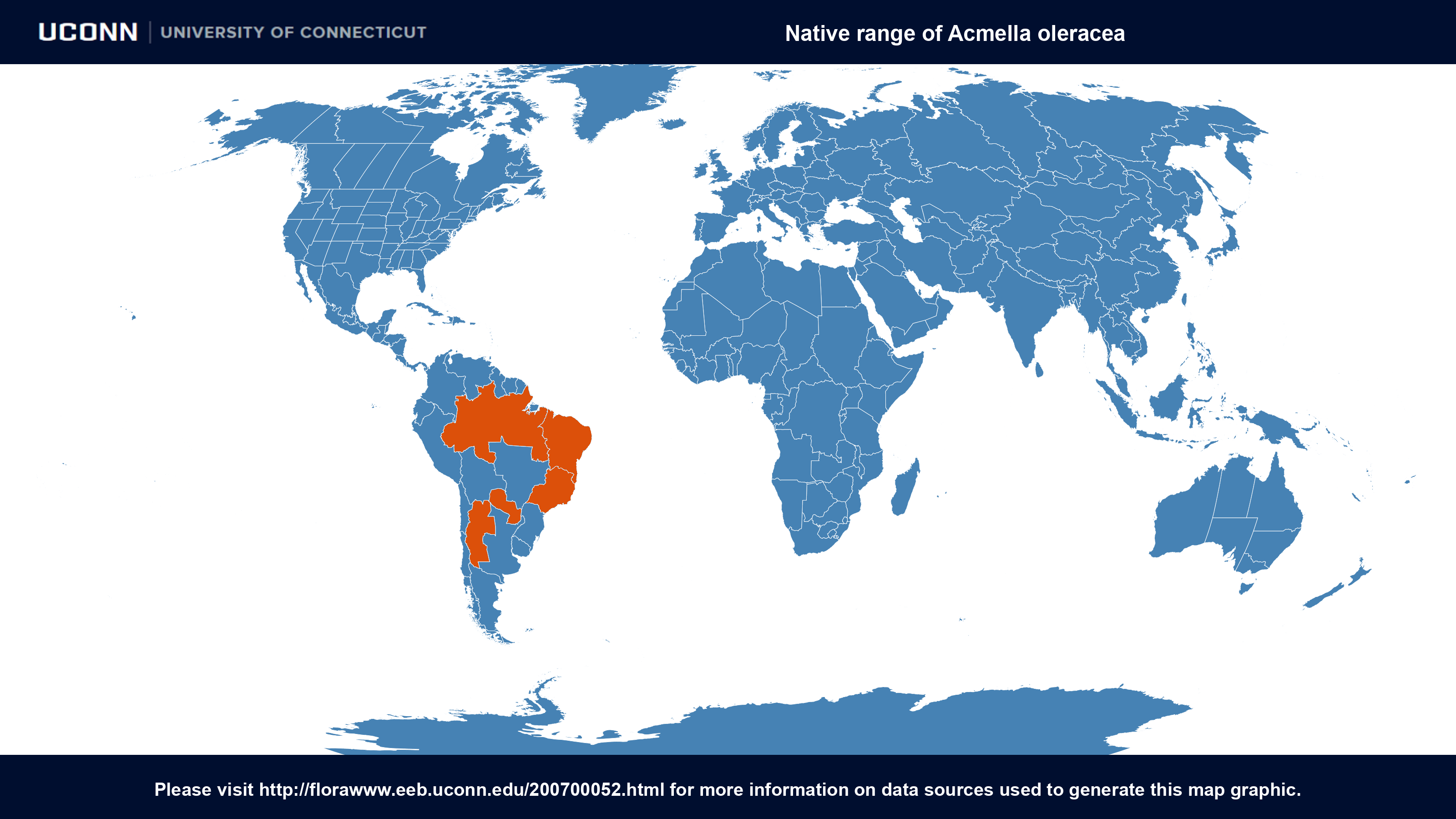
- Country of Origin: Brazil
- Description: Paracress has no particular odour, but when eaten it has an interesting flavour that slowly develops from pleasant and salty to a strong, tickling-burning pungency that leaves back a numb feeling in the mouth. Biting into a flower head of paracress is an adventure long remembered!
The pungent flavour of paracress is due to an unsaturated alkamid, spilanthol, which reaches its highest concentration (1%) in the flowers.
- Uses: Culinary use of paracress is today restricted to tropical Brazil, particularly the provinces Acre, Amazonas, Pará and Ceará, where the herb is much used in the cooking styles of the indigenous peoples. There, the strach-containing tubers of manioc is a staple, and since that vegetable has a quite bland taste, it is often flavoured with potent spices. For this purpuse, paracress is often used; the leaves are used fresh, added as a whole and eaten as an additional source of vitamins (and flavour).
Medicinal: Masticatory. Traditional medicine used this plant for a wide range of uses. Modern scientific studies support the health benefits of paracress. (From Philippine Alternative Medicine)
- IMPORTANT NOTE: Plant Uses are for informational purposes only. EEB Greenhouses assume no responsibility for adverse effects from the use of any plants referred to on this site. Always seek advice from a professional before using any plant medicinally.
- USDA Zone: 9b-11
Accession Data:
- Accession # 200700052
- Source: Jardin Botanique De La Gacilly 2007 Index Seminum
- Accession Date: 03-19-2007
- Bench: 1306 - NEOA: West Bench NN
- Currently: active - healthy
- Qty: 1 confirmed on 07-01-2025
Classification:
- Division: Magnoliophyta
- Class: Magnoliopsida
- SubClass: euasterid II
- Order: Asterales
- SubOrder:
- Family: Asteraceae
- SubFamily: Asteroideae
- Tribe: Heliantheae
- SubTribe: Spilanthinae
Flowering Data:
This accession has been observed in bloom on:| Year | Jan | Feb | Mar | Apr | May | Jun | Jul | Aug | Sep | Oct | Nov | Dec | ||||||||||||||||||||||||||||||||||||||||
|---|---|---|---|---|---|---|---|---|---|---|---|---|---|---|---|---|---|---|---|---|---|---|---|---|---|---|---|---|---|---|---|---|---|---|---|---|---|---|---|---|---|---|---|---|---|---|---|---|---|---|---|---|
| 2025 | ||||||||||||||||||||||||||||||||||||||||||||||||||||
| 2024 | ||||||||||||||||||||||||||||||||||||||||||||||||||||
| 2023 | ||||||||||||||||||||||||||||||||||||||||||||||||||||
| 2022 | ||||||||||||||||||||||||||||||||||||||||||||||||||||
| 2021 | ||||||||||||||||||||||||||||||||||||||||||||||||||||
| 2020 | ||||||||||||||||||||||||||||||||||||||||||||||||||||
| 2019 | ||||||||||||||||||||||||||||||||||||||||||||||||||||
| 2018 | ||||||||||||||||||||||||||||||||||||||||||||||||||||
| 2017 | ||||||||||||||||||||||||||||||||||||||||||||||||||||
| 2016 | ||||||||||||||||||||||||||||||||||||||||||||||||||||
| 2015 | ||||||||||||||||||||||||||||||||||||||||||||||||||||
| 2014 | ||||||||||||||||||||||||||||||||||||||||||||||||||||
| 2013 | ||||||||||||||||||||||||||||||||||||||||||||||||||||
| 2012 | ||||||||||||||||||||||||||||||||||||||||||||||||||||
| 2011 | ||||||||||||||||||||||||||||||||||||||||||||||||||||
| 2010 | ||||||||||||||||||||||||||||||||||||||||||||||||||||
| 2009 | ||||||||||||||||||||||||||||||||||||||||||||||||||||
| 2008 | ||||||||||||||||||||||||||||||||||||||||||||||||||||
| 2007 | ||||||||||||||||||||||||||||||||||||||||||||||||||||
References (internal):
- EEB Greenhouse Holdings native to: Brazil Northeast / Brazil Southeast / Brazil North / Argentina Northwest / Paraguay
References (external):
- A brief article on Spilanthes
- Gernot Katzer's Spice Dictionary - last visited on 27 November 2009
- An article from All Things Considered on NPR.org
- Acmella oleracea. (2010, October 5). Wikispecies, . Retrieved 12:45, September 12, 2014.
- The Plant List (2013). Version 1.1. Last accessed on Thursday, May 17, 2018.
- Acmella oleracea at ARS-GRIN. Last accessed on Thursday, May 17, 2018.
- Acmella oleracea at Catalogue of Life. Last accessed on Thursday, May 17, 2018.
data regenerated on Tue, 01 Jul 2025 11:42:47 -0400 [bcm v4.0]
Images:
Additional images for this accession:
Click on thumbnails to enlarge
Current Accessions in the Asteraceae
Subfamily
Tribe Anthemideae
Subfamily Asteroideae
- Anthemidinae: Tanacetum balsamita
- Artemisiinae: Artemisia tridentata

- Artemisiinae: Artemisia tridentata subsp. vaseyana
- Athanasiinae: Athanasia pinnata

- Glebionidinae: Argyranthemum foeniculaceum
Subfamily Asteroideae
Tribe Astereae
- Homochrominae: Felicia amelloides
- Machaerantherinae: Grindelia integrifolia W/C
- Solidagininae: Solidago rigida
- Unplaced Astereae: Ericameria nauseosa var. nauseosa
Subfamily Asteroideae
Tribe Coreopsideae
Subfamily Asteroideae
Tribe Eupatorieae
- Hebecliniinae: Bartlettina sordida
- Piqueriinae: Stevia rebaudiana
Subfamily Asteroideae
Tribe Heliantheae
- Ecliptinae: Sphagneticola trilobata
- Helianthinae: Helianthus tuberosus
- Spilanthinae: Acmella oleracea

Subfamily Asteroideae
Tribe Neurolaeneae
Subfamily Asteroideae
Tribe Senecioneae
- Roldana petasitis
- Othonninae: Othonna capensis
- Othonninae: Othonna cf. retrofracta W/C
- Othonninae: Othonna lobata
- Othonninae: Othonna amplexifolia
- Senecioninae: Gynura bicolor
- Senecioninae: Jacobaea maritima
- Senecioninae: Kleinia ficoides
- Senecioninae: Kleinia neriifolia W/C
- Senecioninae: Kleinia repens
- Senecioninae: Packera obovata
- Senecioninae: Pseudogynoxys chenopodioides
- Senecioninae: Senecio articulatus
- Senecioninae: Senecio barbertonicus
- Senecioninae: Senecio crassissimus
- Senecioninae: Senecio haworthii
- Senecioninae: Senecio mandraliscae
- Senecioninae: Senecio petraeus
- Senecioninae: Senecio radicans
- Senecioninae: Senecio rowleyanus
- Senecioninae: Senecio stapeliformis v. minor
- Tussilagininae: Farfugium japonicum
Subfamily Barnesioideae
Tribe Barnedesieae
Subfamily Carduoideae
Tribe Cardueae
- Carlininae: Atractylodes macrocephala
Subfamily Carduoideae
Tribe Tarchonantheae
W/C = Wild Collected
 = indicates flowering in past 14 days
= images available for this accession
= map available for this accession
= indicates flowering in past 14 days
= images available for this accession
= map available for this accession
 = accession added within past 90 days