Accession Data:
Syngonium podophyllum Schott
- Common Name: Arrowhead Vine
- Family: Araceae Juss.
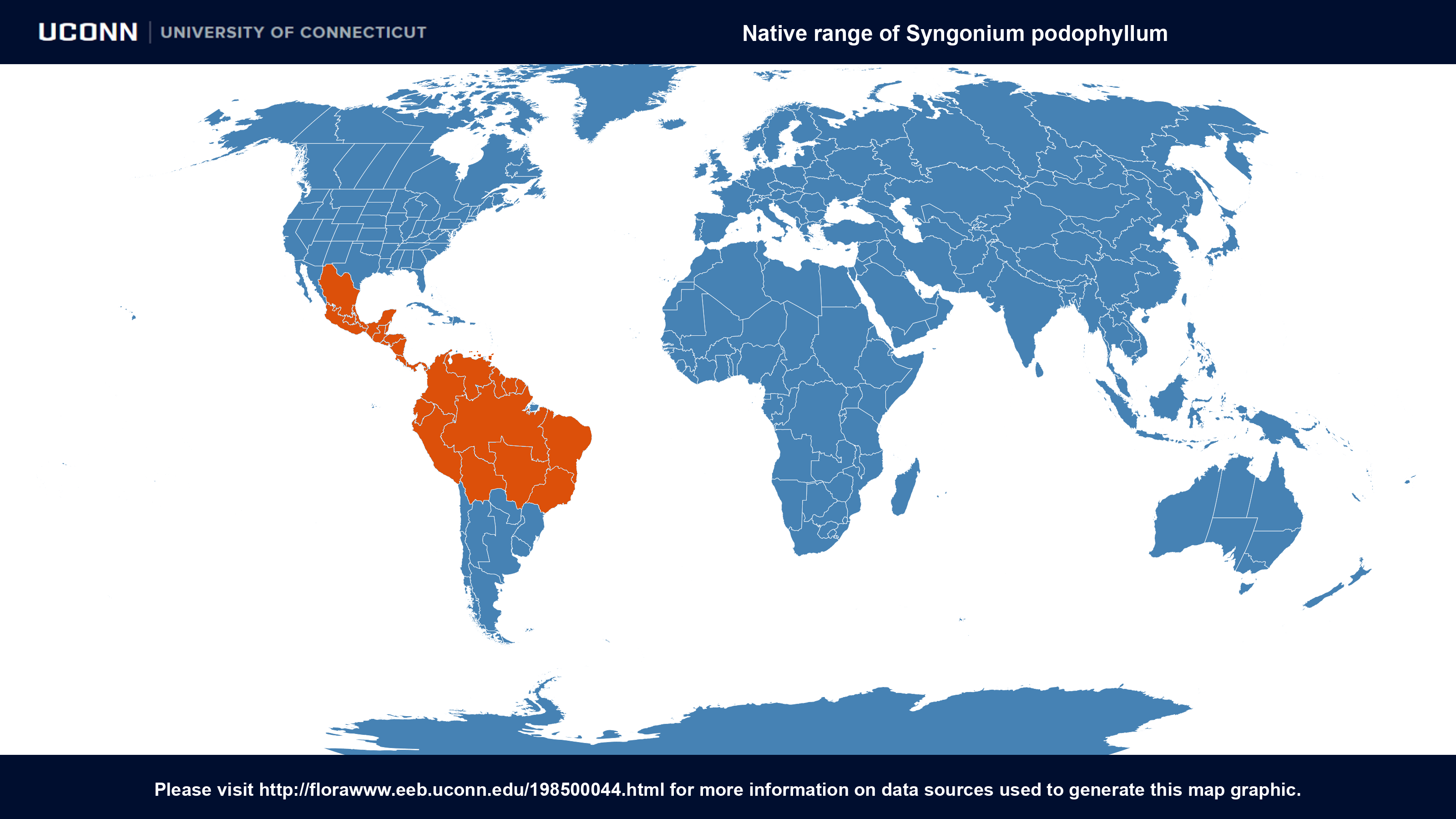
- Country of Origin: Mexico to Trop. America
- Uses: Traditional Medicine:
• In Belize, roots and bark used in traditional medicine for treatment of superficial and deep wounds. • In Central American, used for various skin disorders. Others • Indoor Plant / Air Purifier: One of the plants studied and found effective in helping to remove indoor air pollutants.
Studies • Antibacterial: A study was done on 21 extracts of seven plants used in wound healing, including Syngonium piodophyllum leaves and bark, to evaluate antibacterial properties against strains of E coli, P aeruginosa, S aureus and E faecalis. Almost all the extracts showed some growth inhibition of one or more bacterial strains. Antibacterial activity was reported for the first time for Syngonium podophyllum. • Anti-Inflammatrory: Extracts of seven herbal drugs used in Central American folk medicined were evaluated for their topical antiinflammatory activity against Croton oil-induced ear edema in mice. All the extracts, including S podophyllum induced dose-dependent oedema reduction, presenting potential sources of principles with high anti-inflammatory activity.
Toxicity • All parts of the plant are considered poisonous and causes severe mouth pain if eaten. • Araceae contain calcium oxalate crystals, believed to cause intense local irritation on handling or consuming. Some attribute the reaction to other compounds present as the irritation is not seen in properly cooked plants, although the crystal persist after heating.
- IMPORTANT NOTE: Plant Uses are for informational purposes only. EEB Greenhouses assume no responsibility for adverse effects from the use of any plants referred to on this site. Always seek advice from a professional before using any plant medicinally.
- USDA Zone: 10b-11
Accession Data:
- Accession # 198500044
- Source: Unknown
- Accession Date: 12-31-1985
- Bench: 1303 - NEOA: Ground Bed 1 NE
- Currently: active - healthy
- Qty: 2 confirmed on 10-08-2024
- Restrictions:
- Poisonous Plant Parts - Not for Human Consumption
All plant parts considered poisonous, causes severe mouth pain if consumed.
- Poisonous Plant Parts - Not for Human Consumption
Classification:
- Division: Magnoliophyta
- Class: Liliopsida
- SubClass: monocots
- Order: Alismatales
- SubOrder:
- Family: Araceae
- SubFamily: Aroideae
- Tribe: Caladieae
- SubTribe:
Flowering Data:
This accession has been observed in bloom on:| Year | Jan | Feb | Mar | Apr | May | Jun | Jul | Aug | Sep | Oct | Nov | Dec | ||||||||||||||||||||||||||||||||||||||||
|---|---|---|---|---|---|---|---|---|---|---|---|---|---|---|---|---|---|---|---|---|---|---|---|---|---|---|---|---|---|---|---|---|---|---|---|---|---|---|---|---|---|---|---|---|---|---|---|---|---|---|---|---|
| 2025 | ||||||||||||||||||||||||||||||||||||||||||||||||||||
| 2024 | ||||||||||||||||||||||||||||||||||||||||||||||||||||
| 2023 | ||||||||||||||||||||||||||||||||||||||||||||||||||||
| 2022 | ||||||||||||||||||||||||||||||||||||||||||||||||||||
| 2021 | ||||||||||||||||||||||||||||||||||||||||||||||||||||
| 2020 | ||||||||||||||||||||||||||||||||||||||||||||||||||||
| 2019 | ||||||||||||||||||||||||||||||||||||||||||||||||||||
| 2018 | ||||||||||||||||||||||||||||||||||||||||||||||||||||
| 2017 | ||||||||||||||||||||||||||||||||||||||||||||||||||||
| 2016 | ||||||||||||||||||||||||||||||||||||||||||||||||||||
| 2015 | ||||||||||||||||||||||||||||||||||||||||||||||||||||
| 2014 | ||||||||||||||||||||||||||||||||||||||||||||||||||||
| 2013 | ||||||||||||||||||||||||||||||||||||||||||||||||||||
| 2012 | ||||||||||||||||||||||||||||||||||||||||||||||||||||
References (internal):
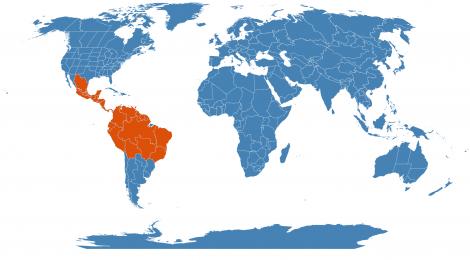
- EEB Greenhouse Holdings native to: Mexico Central / Mexico Northeast / Mexico Gulf / Mexico Southwest / Mexico Southeast / Belize / Costa Rica / El Salvador / Guatemala / Honduras / Nicaragua / Panama / Trinidad-Tobago / Venezuelan Antilles / French Guiana / Guyana / Suriname / Venezuela / Bolivia / Colombia / Ecuador / Peru / Brazil West-Central / Brazil Northeast / Brazil Southeast / Brazil North
References (external):
- The Plant List (2013). Version 1.1. Last accessed on Sunday, March 10, 2019.
- WCSP (2015). World Checklist of Selected Plant Families. Facilitated by the Royal Botanic Gardens, Kew. Last accessed on Sunday, March 10, 2019.
- Arrow Leaf at Philippine Alternative Medicine. Last accessed on Sunday, March 10, 2019.
data regenerated on Wed, 02 Jul 2025 09:57:06 -0400 [bcm v4.0]
Images:
Additional images for this accession:
Click on thumbnails to enlargeCurrent Accessions in the Araceae
Subfamily Aroideae
Subfamily Aroideae
Tribe Anubiadeae
Subfamily Aroideae
Tribe Areae
Subfamily Aroideae
Tribe Arisaemateae
Subfamily Aroideae
Tribe Caladieae
Subfamily Aroideae
Tribe Colocasieae
- Alocasia Amazonica


- Alocasia cuprea

- Alocasia melo
- Alocasia Micholitziana
- Colocasia affinis
- Colocasia esculenta
- Colocasia fallax
- Colocasia gigantea cv. Thailand Giant
- Remusatia vivipara
Subfamily Aroideae
Tribe Culcasieae
Subfamily Aroideae
Tribe Dieffenbachieae
Subfamily Aroideae
Tribe Philodendreae
- Philodendron angustisectum
- Philodendron atabapoense
- Philodendron bipinnatifidum
- Philodendron brandtianum
- Philodendron crassinervium
- Philodendron gloriosum
- Philodendron grazielae
- Philodendron hederaceum var. oxycardium
- Philodendron imbe
- Philodendron joepii
- Philodendron ornatum
- Philodendron panduriforme
- Philodendron patriciae W/C
- Philodendron pedatum
- Philodendron tripartitum
- Philodendron verrucosum
Subfamily Aroideae
Tribe Pisteae
Subfamily Aroideae
Tribe Spathicarpeae
Subfamily Aroideae
Tribe Thomsonieae
- Amorphophallus albus
- Amorphophallus bulbifer
- Amorphophallus dunnii
- Amorphophallus henryi
- Amorphophallus impressus
- Amorphophallus konjac
- Amorphophallus muelleri
- Amorphophallus paeoniifolius
- Amorphophallus pygmaeus W/C
- Amorphophallus titanum
- Amorphophallus titanum
- Amorphophallus titanum
- Amorphophallus titanum
- Amorphophallus variabilis
- Amorphophallus yunnanensis
- Amorphophallus yunnanensis
Subfamily Aroideae
Tribe Zantedeschieae
Subfamily Lasioideae
Subfamily Lemnoideae
Subfamily Monsteroideae
Tribe Monstereae
- Epipremnum falcifolia
- Epipremnum pinnatum
- Monstera adansonii
- Monstera deliciosa
- Monstera dubia
- Monstera siltepecana
- Monstera subpinnata
- Rhaphidophora cryptantha
- Rhaphidophora decursiva
- Rhaphidophora korthalsii
- Rhaphidophora sulcata
- Scindapsus pictus
- Scindapsus pictus 'Exotica'
- Stenospermation sp.
Subfamily Monsteroideae
Tribe Spathiphylleae
Subfamily Pothoideae
Tribe Anthurieae
- Anthurium andraeanum
- Anthurium bakeri
- Anthurium crystallinum
- Anthurium cubense
- Anthurium forgetii
- Anthurium forgetii
- Anthurium forgetii
- Anthurium friedrichsthalii
- Anthurium gracile
- Anthurium luxurians
- Anthurium pedatoradiatum
- Anthurium pendens
- Anthurium pentaphyllum var. bombacifolium
- Anthurium podophyllum W/C
- Anthurium pseudospectabile W/C
- Anthurium scandens
- Anthurium schlechtendalii
- Anthurium veitchii
- Anthurium villenaorum
- Anthurium wendlingeri
Subfamily Pothoideae
Tribe Potheae
Subfamily Zamioculcadoideae
W/C = Wild Collected = indicates flowering in past 14 days
= images available for this accession
= map available for this accession
= indicates flowering in past 14 days
= images available for this accession
= map available for this accession
 = accession added within past 90 days