Accession Data:
Colocasia esculenta (L.) Schott
- Common Name: Taro
- Family: Araceae Juss.
- Country of Origin: Tropical Asia
- Description: [syn. Colocasia antiquorum var. esculenta Schott; Caladium esculentum Hort.]
[Vietnamese: khoai mon]A variable species of perennial herb to 3-7 feet tall; leaves all basal from a corm, blades to 2 feet long, upper surface velvety green to bluish-black between primary veins, petioles green to violet or reddish; spathe to 15 inches long, basally green or red-purple, blade expanded, reflexed, yellow. Runs into many forms and variants.
Tropical Asia, where is is commonly grown for food.
- Uses: Edible: Grown in throughout the tropics for food. All parts of the plant are edible and rich in nutrients especially vitamin B.
- IMPORTANT NOTE: Plant Uses are for informational purposes only. EEB Greenhouses assume no responsibility for adverse effects from the use of any plants referred to on this site. Always seek advice from a professional before using any plant medicinally.
- USDA Zone: 8a-11
Accession Data:
- Accession # 198500255
- Source: Unknown
- Accession Date: 12-31-1985
- Bench: 1210 - AUS:Ground Bed 2 NE
- Currently: active - healthy
- Qty: 1 confirmed on 10-05-2024
- Restrictions:
Classification:
- Division: Magnoliophyta
- Class: Liliopsida
- SubClass: monocots
- Order: Alismatales
- SubOrder:
- Family: Araceae
- SubFamily: Aroideae
- Tribe: Colocasieae
- SubTribe:
References (internal):
- Medicinal Plants
- Edible Plants
- Root Vegetables - Corms
- Aquatic Plants
- Medicinal Plants - Traditional African Medicine
- Domesticated Plants of Austronesia
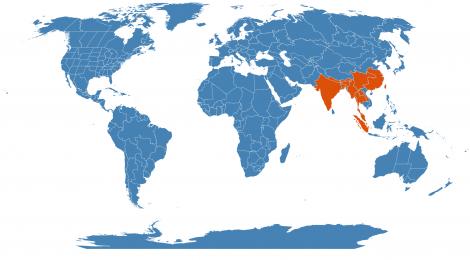
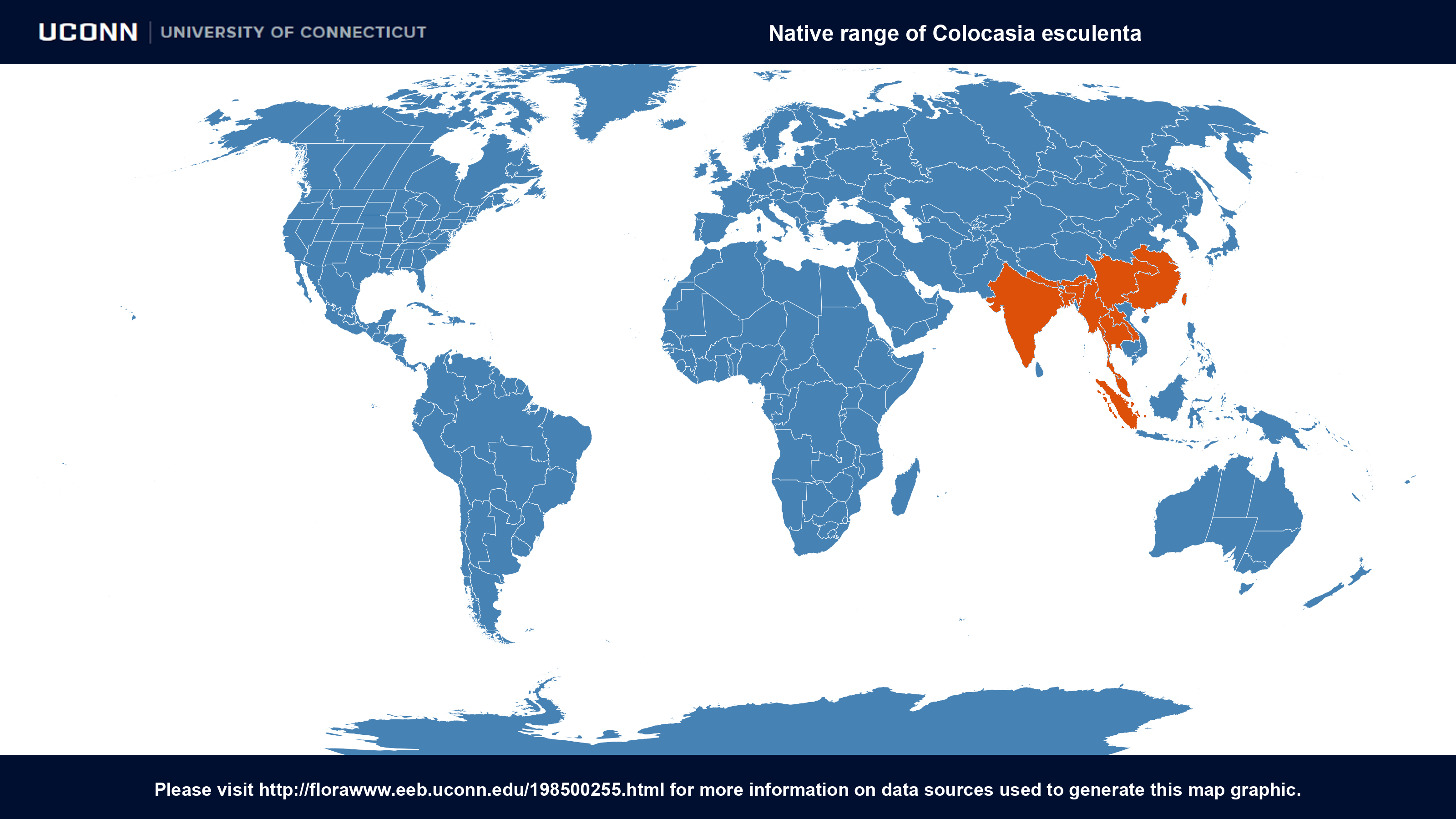
- EEB Greenhouse Holdings native to: China South-Central / China Southeast / Taiwan / Assam / Bangladesh / East Himalaya / India / Nepal / Laos / Myanmar / Thailand / Malaya / Sumatera /
References (external):
Hortus Third, LH Bailey Hortorium, 1975
data regenerated on Wed, 02 Jul 2025 09:57:27 -0400 [bcm v4.0]
Images:
Additional images for this accession:
Click on thumbnails to enlargeCurrent Accessions in the Araceae
Subfamily Aroideae
Subfamily Aroideae
Tribe Anubiadeae
Subfamily Aroideae
Tribe Areae
Subfamily Aroideae
Tribe Arisaemateae
Subfamily Aroideae
Tribe Caladieae
Subfamily Aroideae
Tribe Colocasieae
- Alocasia Amazonica


- Alocasia cuprea

- Alocasia melo
- Alocasia Micholitziana
- Colocasia affinis
- Colocasia esculenta
- Colocasia fallax
- Colocasia gigantea cv. Thailand Giant
- Remusatia vivipara
Subfamily Aroideae
Tribe Culcasieae
Subfamily Aroideae
Tribe Dieffenbachieae
Subfamily Aroideae
Tribe Philodendreae
- Philodendron angustisectum
- Philodendron atabapoense
- Philodendron bipinnatifidum
- Philodendron brandtianum
- Philodendron crassinervium
- Philodendron gloriosum
- Philodendron grazielae
- Philodendron hederaceum var. oxycardium
- Philodendron imbe
- Philodendron joepii
- Philodendron ornatum
- Philodendron panduriforme
- Philodendron patriciae W/C
- Philodendron pedatum
- Philodendron tripartitum
- Philodendron verrucosum
Subfamily Aroideae
Tribe Pisteae
Subfamily Aroideae
Tribe Spathicarpeae
Subfamily Aroideae
Tribe Thomsonieae
- Amorphophallus albus
- Amorphophallus bulbifer
- Amorphophallus dunnii
- Amorphophallus henryi
- Amorphophallus impressus
- Amorphophallus konjac
- Amorphophallus muelleri
- Amorphophallus paeoniifolius
- Amorphophallus pygmaeus W/C
- Amorphophallus titanum
- Amorphophallus titanum
- Amorphophallus titanum
- Amorphophallus titanum
- Amorphophallus variabilis
- Amorphophallus yunnanensis
- Amorphophallus yunnanensis
Subfamily Aroideae
Tribe Zantedeschieae
Subfamily Lasioideae
Subfamily Lemnoideae
Subfamily Monsteroideae
Tribe Monstereae
- Epipremnum falcifolia
- Epipremnum pinnatum
- Monstera adansonii
- Monstera deliciosa
- Monstera dubia
- Monstera siltepecana
- Monstera subpinnata
- Rhaphidophora cryptantha
- Rhaphidophora decursiva
- Rhaphidophora korthalsii
- Rhaphidophora sulcata
- Scindapsus pictus
- Scindapsus pictus 'Exotica'
- Stenospermation sp.
Subfamily Monsteroideae
Tribe Spathiphylleae
Subfamily Pothoideae
Tribe Anthurieae
- Anthurium andraeanum
- Anthurium bakeri
- Anthurium crystallinum
- Anthurium cubense
- Anthurium forgetii
- Anthurium forgetii
- Anthurium forgetii
- Anthurium friedrichsthalii
- Anthurium gracile
- Anthurium luxurians
- Anthurium pedatoradiatum
- Anthurium pendens
- Anthurium pentaphyllum var. bombacifolium
- Anthurium podophyllum W/C
- Anthurium pseudospectabile W/C
- Anthurium scandens
- Anthurium schlechtendalii
- Anthurium veitchii
- Anthurium villenaorum
- Anthurium wendlingeri
Subfamily Pothoideae
Tribe Potheae
Subfamily Zamioculcadoideae
W/C = Wild Collected = indicates flowering in past 14 days
= images available for this accession
= map available for this accession
= indicates flowering in past 14 days
= images available for this accession
= map available for this accession
 = accession added within past 90 days