Accession Data:
Allamanda cathartica L.
- Common Name: Golden Trumpet
- Family: Apocynaceae Juss.
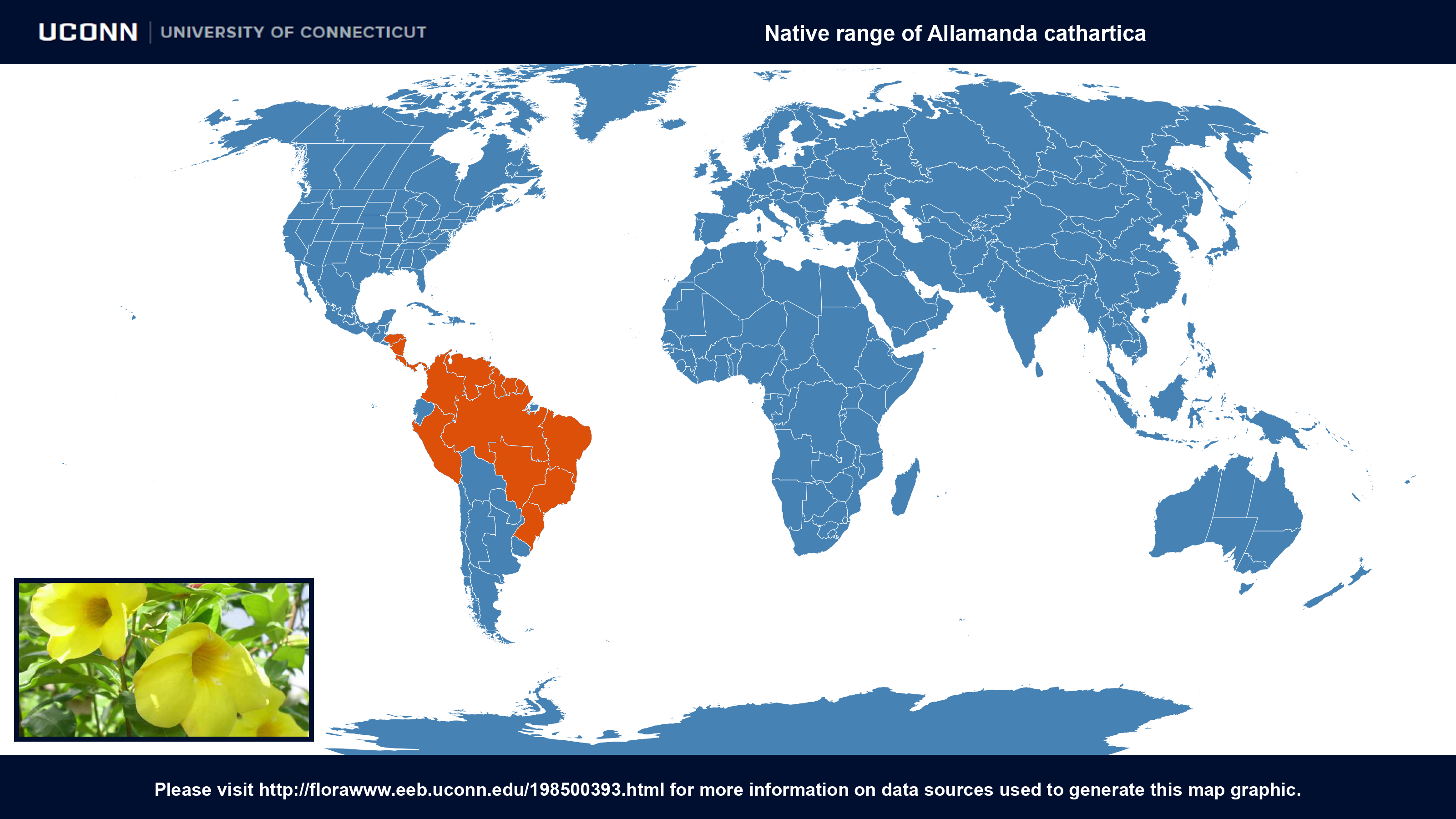
- Country of Origin: South America
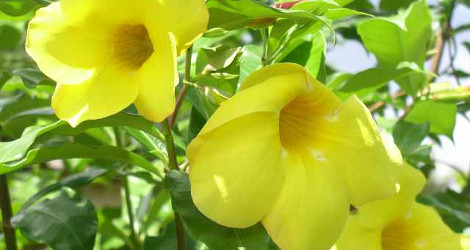
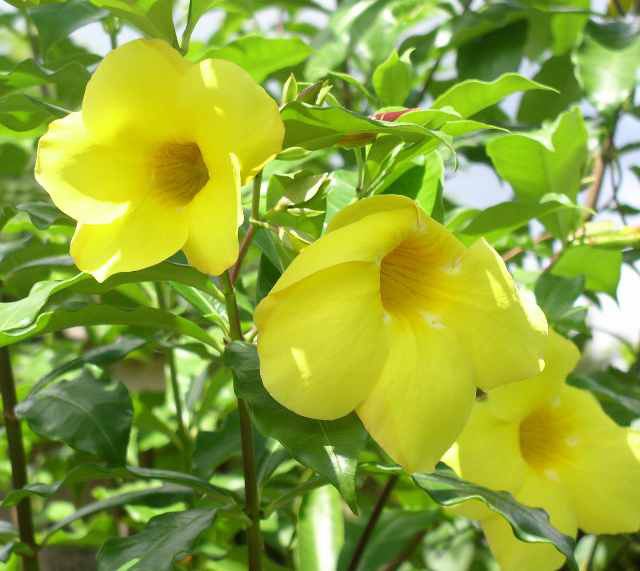
- Description: Vigorous vine, to 50 feet long; leaves opposite or in whorls of 3-4, mostly oblanceolate to elliptic-oblong, to 4-6 inches long, short-acuminate, attenuate to a very short petiole; calyx lobes unequal, corolla bright yellow with a paler throat, to 5 inches across, narrowed below into a slender tube to 1 3/8 inches long and not swollen at base, lobes ovate), and broadly tapering to each end; wider than oblanceolate.">obovate and rounded; capsule about 1.5 inches in diameter with spines about 3/8 inch long.
Probably from northern South America but now widespread.
The name Allamanda comes from Dr. F. Allamanda, a professor of natural history in Leyden in the latter part of the 18th Century.
Known as Akar Chempaka Hutan, Bunga Akar Kuning in Malaysia
All parts of the plant contain the iridoid lactone allamandin and may produce symptoms of vomiting or diarhea if ingested.
- Uses: Allamanda cathartica is a wonderful example of a plant that is quite poisonous but also holds significant medicinal powers. While studies have shown that the plant has notable laxative in effect">purgative effects, wound healing abilities, a reversible anti fertility effect, is an antidermatophytic, purgative effect, anti-proliferative effect, anti-microbial, cytotoxic, and a synergistic anti inflammatory effect when used with Piper nigrum. These medicinal effects are only when the plant material is used correctly, incorrect usage can easily result in toxicity.
From Philippine Alternative Medicine
- IMPORTANT NOTE: Plant Uses are for informational purposes only. EEB Greenhouses assume no responsibility for adverse effects from the use of any plants referred to on this site. Always seek advice from a professional before using any plant medicinally.
- USDA Zone: 11-12
Accession Data:
- Accession # 198500393
- Source: Unknown
- Recorded Vouchers:
- Voucher 128496 at George Safford Torrey Herbarium (CONN). Herbarium Image
- Accession Date: 12-31-1985
- Bench: 1301 - NEOA: East Bench NN
- Currently: active - healthy
- Qty: 2 confirmed on 01-15-2025
- Restrictions:
- Poisonous Plant Parts - Not for Human Consumption
All parts of the plant contain the iridoid lactone allamandin and may produce symptoms of vomiting or diarhea if ingested.
- Poisonous Plant Parts - Not for Human Consumption
Classification:
- Division: Magnoliophyta
- Class: Magnoliopsida
- SubClass: euasterid I
- Order: Gentianales
- SubOrder:
- Family: Apocynaceae
- SubFamily: Rauvolfioideae
- Tribe: Plumerieae
- SubTribe:
Flowering Data:
This accession has been observed in bloom on:| Year | Jan | Feb | Mar | Apr | May | Jun | Jul | Aug | Sep | Oct | Nov | Dec | ||||||||||||||||||||||||||||||||||||||||
|---|---|---|---|---|---|---|---|---|---|---|---|---|---|---|---|---|---|---|---|---|---|---|---|---|---|---|---|---|---|---|---|---|---|---|---|---|---|---|---|---|---|---|---|---|---|---|---|---|---|---|---|---|
| 2025 | ||||||||||||||||||||||||||||||||||||||||||||||||||||
| 2024 | ||||||||||||||||||||||||||||||||||||||||||||||||||||
| 2023 | ||||||||||||||||||||||||||||||||||||||||||||||||||||
| 2022 | ||||||||||||||||||||||||||||||||||||||||||||||||||||
| 2021 | ||||||||||||||||||||||||||||||||||||||||||||||||||||
| 2020 | ||||||||||||||||||||||||||||||||||||||||||||||||||||
| 2019 | ||||||||||||||||||||||||||||||||||||||||||||||||||||
| 2018 | ||||||||||||||||||||||||||||||||||||||||||||||||||||
| 2017 | ||||||||||||||||||||||||||||||||||||||||||||||||||||
| 2016 | ||||||||||||||||||||||||||||||||||||||||||||||||||||
| 2015 | ||||||||||||||||||||||||||||||||||||||||||||||||||||
| 2014 | ||||||||||||||||||||||||||||||||||||||||||||||||||||
| 2013 | ||||||||||||||||||||||||||||||||||||||||||||||||||||
| 2012 | ||||||||||||||||||||||||||||||||||||||||||||||||||||
| 2011 | ||||||||||||||||||||||||||||||||||||||||||||||||||||
| 2010 | ||||||||||||||||||||||||||||||||||||||||||||||||||||
| 2009 | ||||||||||||||||||||||||||||||||||||||||||||||||||||
| 2008 | ||||||||||||||||||||||||||||||||||||||||||||||||||||
| 2007 | ||||||||||||||||||||||||||||||||||||||||||||||||||||
| 2006 | ||||||||||||||||||||||||||||||||||||||||||||||||||||
| 2005 | ||||||||||||||||||||||||||||||||||||||||||||||||||||
| 2004 | ||||||||||||||||||||||||||||||||||||||||||||||||||||
| 2003 | ||||||||||||||||||||||||||||||||||||||||||||||||||||
References (internal):
- Medicinal Plants
- Bird Pollination (ornithophily)
- Bee Pollination (melittophily)
- Plants with Extrafloral Nectaries
- EEB 3271 - Systematic Botany
- Medicinal Plants - Traditional African Medicine
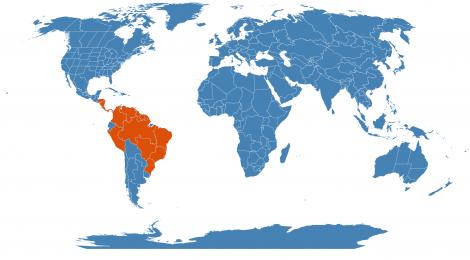
- EEB Greenhouse Holdings native to: Costa Rica / Honduras / Nicaragua / Panama / French Guiana / Guyana / Suriname / Venezuela / Colombia / Peru / Brazil West-Central / Brazil Northeast / Brazil Southeast / Brazil North / Brazil South
References (external):
- Hortus Third, LH Bailey Hortorium, 1976
- The Plant List (2013). Version 1.1. Accessed 13 February 2015.
- WCSP (2015). World Checklist of Selected Plant Families. Facilitated by the Royal Botanic Gardens, Kew. Accessed 13 February 2015.
- Image #00 (cropped) and #02 (original) by Ngocnk2 (Own work) [GFDL or CC BY-SA 3.0], via Wikimedia Commons. Last accessed on Friday, July 21, 2017.

data regenerated on Tue, 01 Jul 2025 11:21:06 -0400 [bcm v4.0]
Images:
Additional images for this accession:
Click on thumbnails to enlarge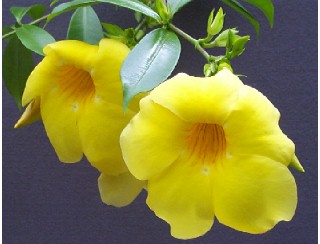

Current Accessions in the Apocynaceae
Subfamily Apocynoideae
Tribe Apocyneae
Subfamily Apocynoideae
Tribe Malouetieae
Subfamily Apocynoideae
Tribe Mesechiteae
Subfamily Apocynoideae
Tribe Nerieae
Subfamily Apocynoideae
Tribe Wrightieae
Subfamily Asclepiadoideae
Tribe Asclepiadeae
- Asclepiadinae: Asclepias curassavica


- Asclepiadinae: Asclepias tuberosa
- Asclepiadinae: Gomphocarpus fruticosus

- Cynanchinae: Cynanchum grandidieri W/C
- Cynanchinae: Cynanchum marnierianum
- Cynanchinae: Cynanchum pachycladon
- Cynanchinae: Cynanchum sp.
- Cynanchinae: Cynanchum verrucosum
Subfamily Asclepiadoideae
Tribe Ceropegieae
- Stapelieae: Caralluma hesperidum
- Stapeliinae: Ceropegia albisepta W/C
- Stapeliinae: Ceropegia ampliata
- Stapeliinae: Ceropegia ampliata
- Stapeliinae: Ceropegia aristolochioides
- Stapeliinae: Ceropegia cimiciodora
- Stapeliinae: Ceropegia fusca
- Stapeliinae: Ceropegia linearis subsp. woodii
- Stapeliinae: Ceropegia x rothii
- Stapeliinae: Ceropegia stapeliiformis
- Stapeliinae: Edithcolea grandis
- Stapeliinae: Hoodia gordonii
- Stapeliinae: Huernia piersii
- Stapeliinae: Huernia plowesii
- Stapeliinae: Huernia thureti var. thureti
- Stapeliinae: Huernia zebrina
- Stapeliinae: Larryleachia cactiformis
- Stapeliinae: Stapelia flavopurpurea
- Stapeliinae: Stapelia gigantea
- Stapeliinae: Stapelia grandiflora
- Stapeliinae: Stapelianthus madagascariensis
Subfamily Asclepiadoideae
Tribe Fockeeae
Subfamily Asclepiadoideae
Tribe Marsdenieae
- Dischidia albiflora
- Dischidia bengalensis
- Dischidia litoralis
- Dischidia major
- Dischidia ovata
- Dischidia ruscifolia
- Hoya australis ssp. australis
- Hoya carnosa
- Hoya carnosa x serpens
- Hoya curtisii
- Hoya imbricata
- Hoya imbricata
- Hoya macgillivrayi
- Hoya macrophylla
- Hoya obovata
- Hoya pubicalyx
- Hoya retusa
- Marsdenia floribunda
Subfamily Periplocoideae
Tribe Cryptolepideae
Subfamily Periplocoideae
Tribe Periploceae
Subfamily Rauvolfioideae
Tribe Alyxieae
Subfamily Rauvolfioideae
Tribe Carisseae
Subfamily Rauvolfioideae
Tribe Plumerieae
Subfamily Rauvolfioideae
Tribe Tabernaemontaneae
- Tabernaemontaninae: Tabernaemontana divaricata
- Tabernaemontaninae: Tabernaemontana elegans
Subfamily Rauvolfioideae
Tribe Vinceae
- Catharanthus roseus
- Rauvolfia serpentina
- Ochrosiinae: Ochrosia elliptica
 = indicates flowering in past 14 days
= images available for this accession
= map available for this accession
= indicates flowering in past 14 days
= images available for this accession
= map available for this accession
 = accession added within past 90 days