Accession Data:
Psidium guajava L.
- Common Name: Guava
- Family: Myrtaceae Juss.
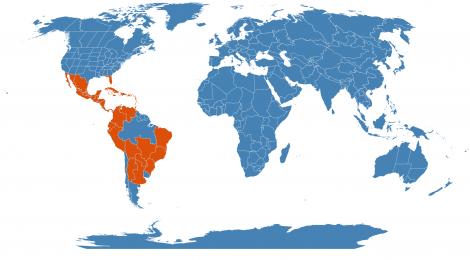
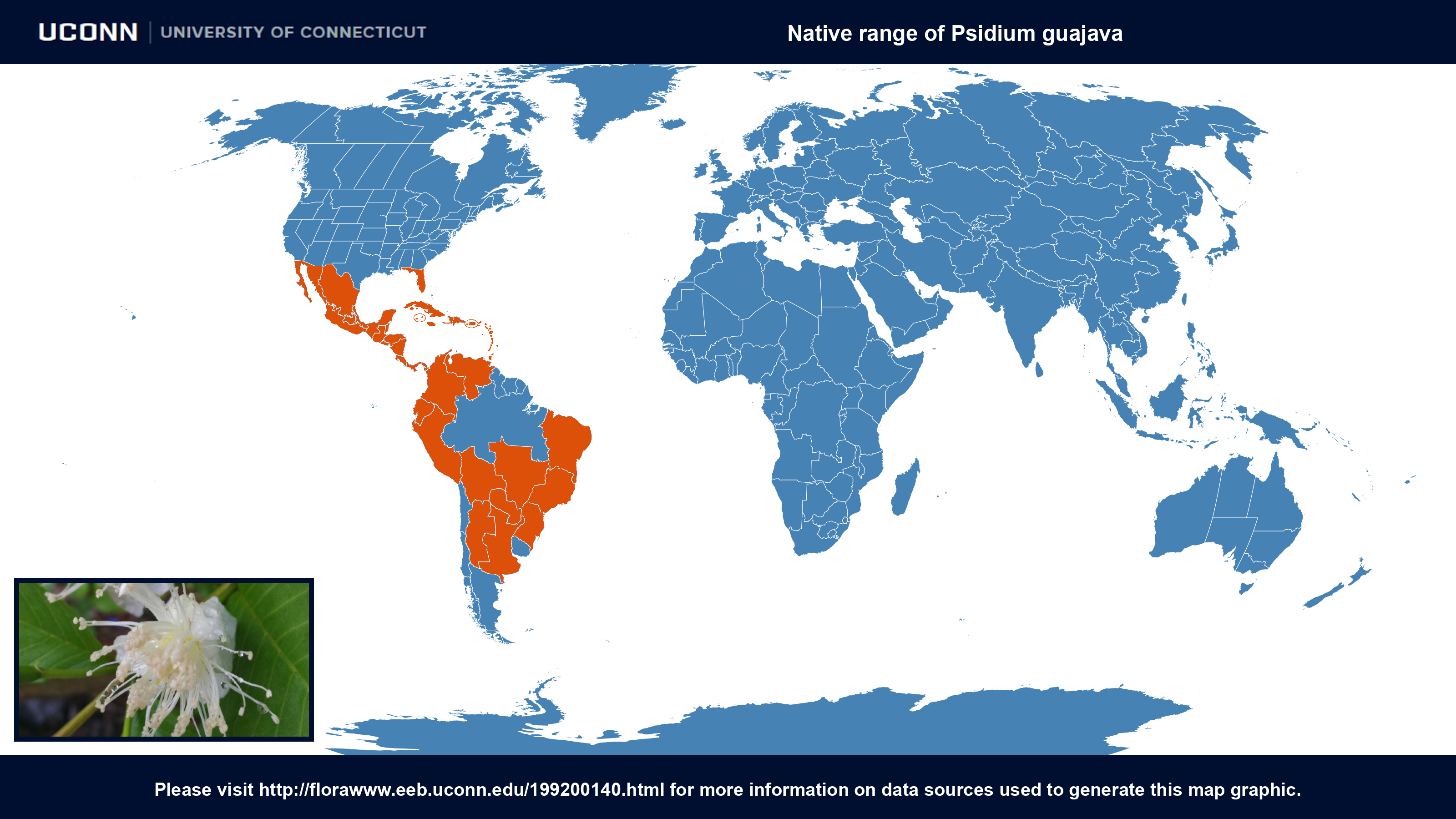
- Country of Origin: Trop. & Subtrop. America
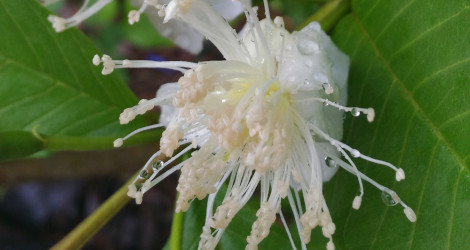
- Description: Shrub or small tree, to 30 feet, bark scaly, greenish-brown, branchlets 4-angled; leaves ovate to oblong-elliptic, to 6 inches long, pubescent beneath, veins prominent; flowers white, solitary or few together on slender peduncles; fruit ovoid to pear-shaped, 1-4 inches long, with yellow or dark pink flesh.
[Thai: farang, ma kuai]
- Uses: Edible: The fruits are used in many ways as a fresh fruit, or the juice may be used for punch or ices. The greatest commercial use of Guava fruit is for jelly. Fruit varies in size, shape, color and flavor, and has a musky, penetrating odor. somewhat insipid when raw, it may be canned, preserved, spiced, and made into jam, relish or chutney. the juice is used for punch.
Medicinal:Preliminary medical research in extracts from the leaves and bark are implicated in therapeutic mechanisms against cancer, bacterial infections, inflammation and pain. For instance, the essential oils from the leaves have shown strong anti-cancer activity. The numerous tannins, polyphenolic compounds, flavonoids, ellagic acid, triterpenoids, guiajaverin, quercetin, and other chemical compounds present in the plant are speculated to account for the observed anti-inflammatory and analgesic effects of the plant's leaf extract. Quercetin is thought to contribute to the anti-diarrhea effect of guava.
Obtained research results suggest that the spasmolytic activity of the Psidium guajava leaf remedy is mainly due to the aglycone quercetin, present in the leaf and in the extract mainly in the form of five flavonols. Quercetin that has demonstrated anti-viral properties against a wide range of viral infections, including the flu. In a current cell study, it was shown to reduce viral replication of the dengue fever virus by 67%. Research suggests that Guava has cardioprotective effects against myocardial ischemia-reperfusion injury in isolated rat hearts, primarily through their radical-scavenging actions.
Guava leaves may treat Dengue fever. The fever is transmitted by the Aedes aegypti mosquito and caused by a virus. Good care is required to recover but dengue fever can be cured with natural ingredients; important is to anticipate at the occurrence of bleeding. The leaves increase the platelets to avoided bleeding; a decoction can raise the platelet count considerably within a period of hours.
Medicinal Info From: Tropilab, http://www.tropilab.com/guavatea.html
- IMPORTANT NOTE: Plant Uses are for informational purposes only. EEB Greenhouses assume no responsibility for adverse effects from the use of any plants referred to on this site. Always seek advice from a professional before using any plant medicinally.
- Culture:
- USDA Zone: 9a-11
Accession Data:
- Accession # 199200140
- Source: J. Caira
- Accession Date: 12-18-1991
- Bench: 1316 - NEOA: Ground Bed 2 SE
- Currently: active - healthy
- Qty: 1 confirmed on 10-08-2024
Classification:
- Division: Magnoliophyta
- Class: Magnoliopsida
- SubClass: rosids
- Order: Myrtales
- SubOrder:
- Family: Myrtaceae
- SubFamily: Myrtoideae
- Tribe: Myrteae
- SubTribe:
Flowering Data:
This accession has been observed in bloom on:| Year | Jan | Feb | Mar | Apr | May | Jun | Jul | Aug | Sep | Oct | Nov | Dec | ||||||||||||||||||||||||||||||||||||||||
|---|---|---|---|---|---|---|---|---|---|---|---|---|---|---|---|---|---|---|---|---|---|---|---|---|---|---|---|---|---|---|---|---|---|---|---|---|---|---|---|---|---|---|---|---|---|---|---|---|---|---|---|---|
| 2024 | ||||||||||||||||||||||||||||||||||||||||||||||||||||
| 2023 | ||||||||||||||||||||||||||||||||||||||||||||||||||||
| 2022 | ||||||||||||||||||||||||||||||||||||||||||||||||||||
| 2021 | ||||||||||||||||||||||||||||||||||||||||||||||||||||
| 2020 | ||||||||||||||||||||||||||||||||||||||||||||||||||||
| 2019 | ||||||||||||||||||||||||||||||||||||||||||||||||||||
| 2018 | ||||||||||||||||||||||||||||||||||||||||||||||||||||
| 2017 | ||||||||||||||||||||||||||||||||||||||||||||||||||||
| 2016 | ||||||||||||||||||||||||||||||||||||||||||||||||||||
| 2015 | ||||||||||||||||||||||||||||||||||||||||||||||||||||
| 2014 | ||||||||||||||||||||||||||||||||||||||||||||||||||||
| 2013 | ||||||||||||||||||||||||||||||||||||||||||||||||||||
| 2012 | ||||||||||||||||||||||||||||||||||||||||||||||||||||
| 2011 | ||||||||||||||||||||||||||||||||||||||||||||||||||||
| 2010 | ||||||||||||||||||||||||||||||||||||||||||||||||||||
| 2009 | ||||||||||||||||||||||||||||||||||||||||||||||||||||
| 2008 | ||||||||||||||||||||||||||||||||||||||||||||||||||||
| 2007 | ||||||||||||||||||||||||||||||||||||||||||||||||||||
References (internal):
- Edible Plants
- Plants with Edible Fruits
- EEB 3271 - Systematic Botany
- Medicinal Plants
- Medicinal Plants - Traditional African Medicine
- EEB Greenhouse Holdings native to: Florida / Mexico Central / Mexico Northeast / Mexico Gulf / Mexico Northwest / Mexico Southwest / Mexico Southeast / Belize / Costa Rica / El Salvador / Guatemala / Honduras / Nicaragua / Panama / Cayman Is. / Cuba / Dominican Republic / Haiti / Jamaica / Leeward Is. / Puerto Rico / Trinidad-Tobago / Windward Is. / Venezuela / Bolivia / Colombia / Ecuador / Peru / Brazil West-Central / Brazil Northeast / Brazil Southeast / Brazil South / Argentina Northeast / Argentina Northwest / Paraguay
References (external):
- The Plant List (2013). Version 1.1. Last accessed on Tuesday, September 12, 2017.
- WCSP (2017). World Checklist of Selected Plant Families. Facilitated by the Royal Botanic Gardens, Kew. Last accessed on Tuesday, September 12, 2017.
- Image #00 (cropped) & #01 (original) by Vijayanrajapuram [CC BY-SA 4.0], from Wikimedia Commons. Last accessed Wednesday, 12 December, 2018.

data regenerated on Wed, 13 Nov 2024 15:06:07 -0500 [bcm v4.0]
Images:
Additional images for this accession:
Click on thumbnails to enlarge
Current Accessions in the Myrtaceae
Subfamily Myrtoideae
Tribe Eucalypteae
Subfamily Myrtoideae
Tribe Leptospermeae
Subfamily Myrtoideae
Tribe Melaleuceae
Subfamily Myrtoideae
Tribe Metrosidereae
Subfamily Myrtoideae
Tribe Myrteae
- Acca sellowiana


- Eugenia brasiliensis
- Eugenia uniflora
- Myrtus communis `Microphylla'
- Pimenta dioica
- Plinia cauliflora
- Psidium cattleianum
- Psidium guajava
- Ugni molinae
Subfamily Myrtoideae
Tribe Syzygieae
Subfamily Psiloxyloideae
Tribe Heteropyxideae
W/C = Wild Collected
 = indicates flowering in past 14 days
= images available for this accession
= map available for this accession
= indicates flowering in past 14 days
= images available for this accession
= map available for this accession
 = accession added within past 90 days