Accession Data:
Plinia cauliflora (Mart.) Kausel
- Common Name: Jabuticaba
- Family: Myrtaceae Juss.
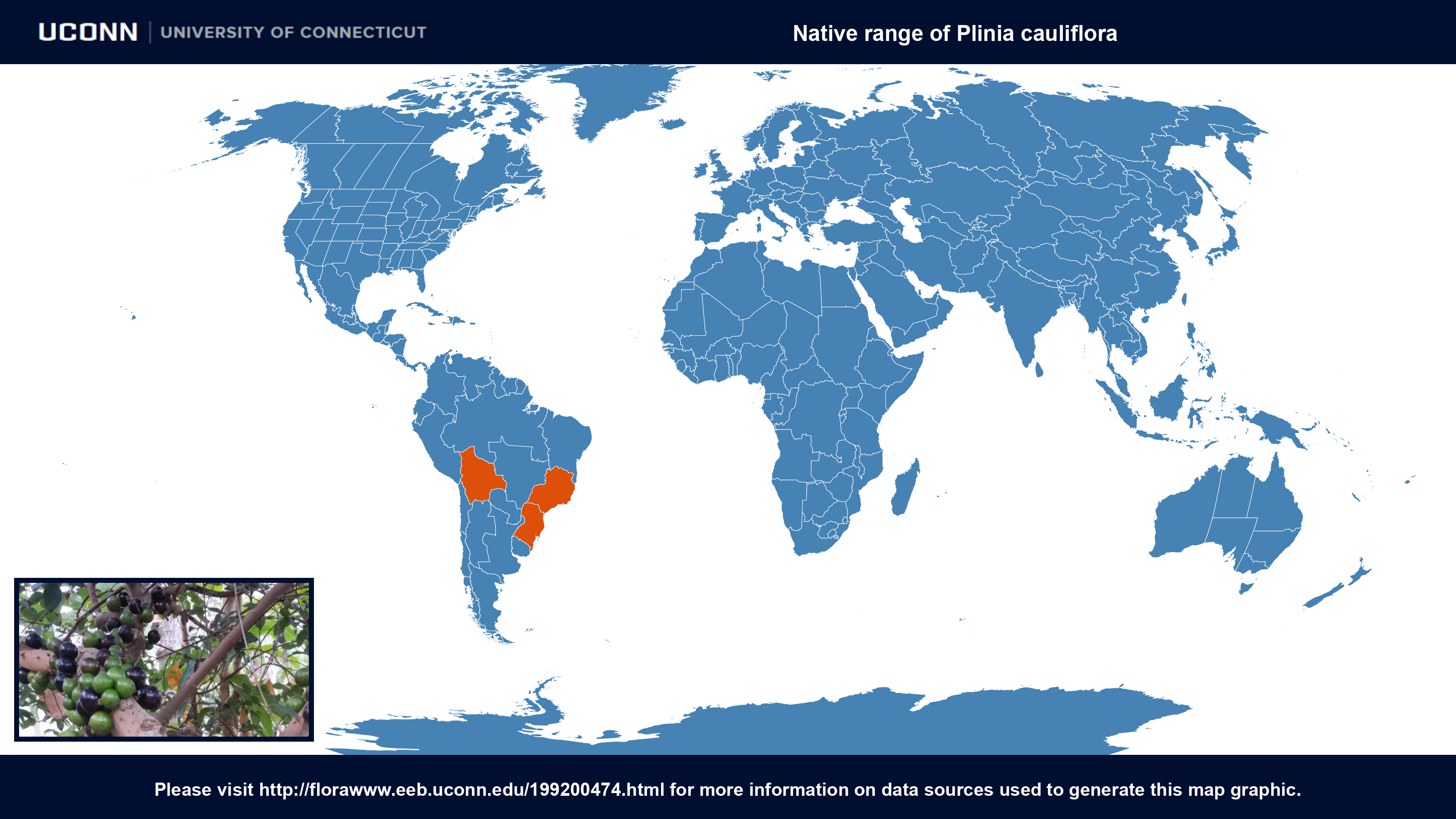
- Country of Origin: Bolivia, SE. & S. Brazil
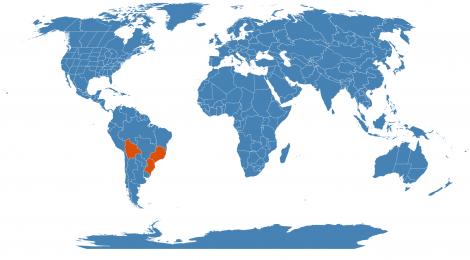
- Habitat: native to the hilly region around Rio de Janeiro and Minas Gerais
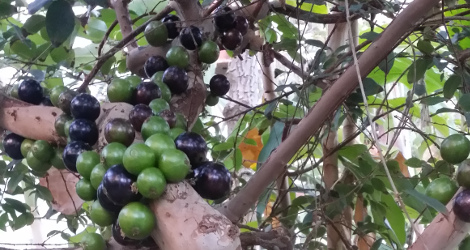
- Description: This shrub or small tree from Brazil has an unusual means of bearing its fruit. The grape-sized, dark bluish-purple-black fruit are borne directly on the trunk or larger branches (cauliflory). This slow-growing plant takes 8 to 10 years to produce fruit unless it is a grafted tree, which reduces the period. Fully grown, the tree bears several crops per year. The fruit is worth the wait, being juicy, grape-like in appearance and taste. It is used in jelly, or as a fine wine, or eaten out of hand. It can withstand temperatures of 26 degrees F. Propagated by seed or grafting. Air layers have rarely been successful.
- Uses: It is used in jelly, or as a fine wine, or eaten out of hand. The astringent decoction of the sun-dried skins is prescribed in Brazil as a treatment for hemoptysis, asthma, diarrhea and dysentery; also as a gargle for chronic inflammation of the tonsils. Such use may also lead to excessive consumption of tannin (carcinogenic if taken over a long period of time)
- IMPORTANT NOTE: Plant Uses are for informational purposes only. EEB Greenhouses assume no responsibility for adverse effects from the use of any plants referred to on this site. Always seek advice from a professional before using any plant medicinally.
- Culture: It can withstand temperatures of 26 degrees F. Propagated by seed or grafting. Air layers have rarely been successful.
- USDA Zone: 9b-11
Accession Data:
- Accession # 199200474
- Source: Alan Wachtel
- Accession Date: 09-17-1992
- Bench: 1316 - NEOA: Ground Bed 2 SE
- Currently: active - healthy
- Qty: 1 confirmed on 10-08-2024
Classification:
- Division: Magnoliophyta
- Class: Magnoliopsida
- SubClass: rosids
- Order: Myrtales
- SubOrder:
- Family: Myrtaceae
- SubFamily: Myrtoideae
- Tribe: Myrteae
- SubTribe:
Flowering Data:
This accession has been observed in bloom on:| Year | Jan | Feb | Mar | Apr | May | Jun | Jul | Aug | Sep | Oct | Nov | Dec | ||||||||||||||||||||||||||||||||||||||||
|---|---|---|---|---|---|---|---|---|---|---|---|---|---|---|---|---|---|---|---|---|---|---|---|---|---|---|---|---|---|---|---|---|---|---|---|---|---|---|---|---|---|---|---|---|---|---|---|---|---|---|---|---|
| 2024 | ||||||||||||||||||||||||||||||||||||||||||||||||||||
| 2023 | ||||||||||||||||||||||||||||||||||||||||||||||||||||
| 2022 | ||||||||||||||||||||||||||||||||||||||||||||||||||||
| 2021 | ||||||||||||||||||||||||||||||||||||||||||||||||||||
| 2020 | ||||||||||||||||||||||||||||||||||||||||||||||||||||
| 2019 | ||||||||||||||||||||||||||||||||||||||||||||||||||||
| 2018 | ||||||||||||||||||||||||||||||||||||||||||||||||||||
| 2017 | ||||||||||||||||||||||||||||||||||||||||||||||||||||
| 2016 | ||||||||||||||||||||||||||||||||||||||||||||||||||||
| 2015 | ||||||||||||||||||||||||||||||||||||||||||||||||||||
References (internal):
- EEB Greenhouse Holdings native to: Bolivia / Brazil Southeast / Brazil South
References (external):
- California Rare Fruit Growers Fruit Facts
- Morton, J. 1987. Jaboticabas. p. 371–374. In: Fruits of warm climates. Julia F. Morton, Miami, FL.
- The Plant List (2013). Version 1.1. Accessed 1 April 2105.
- WCSP (2015). World Checklist of Selected Plant Families. Facilitated by the Royal Botanic Gardens, Kew. Accessed 1 April 2015.
data regenerated on Wed, 13 Nov 2024 15:06:07 -0500 [bcm v4.0]
Images:
Additional images for this accession:
Click on thumbnails to enlarge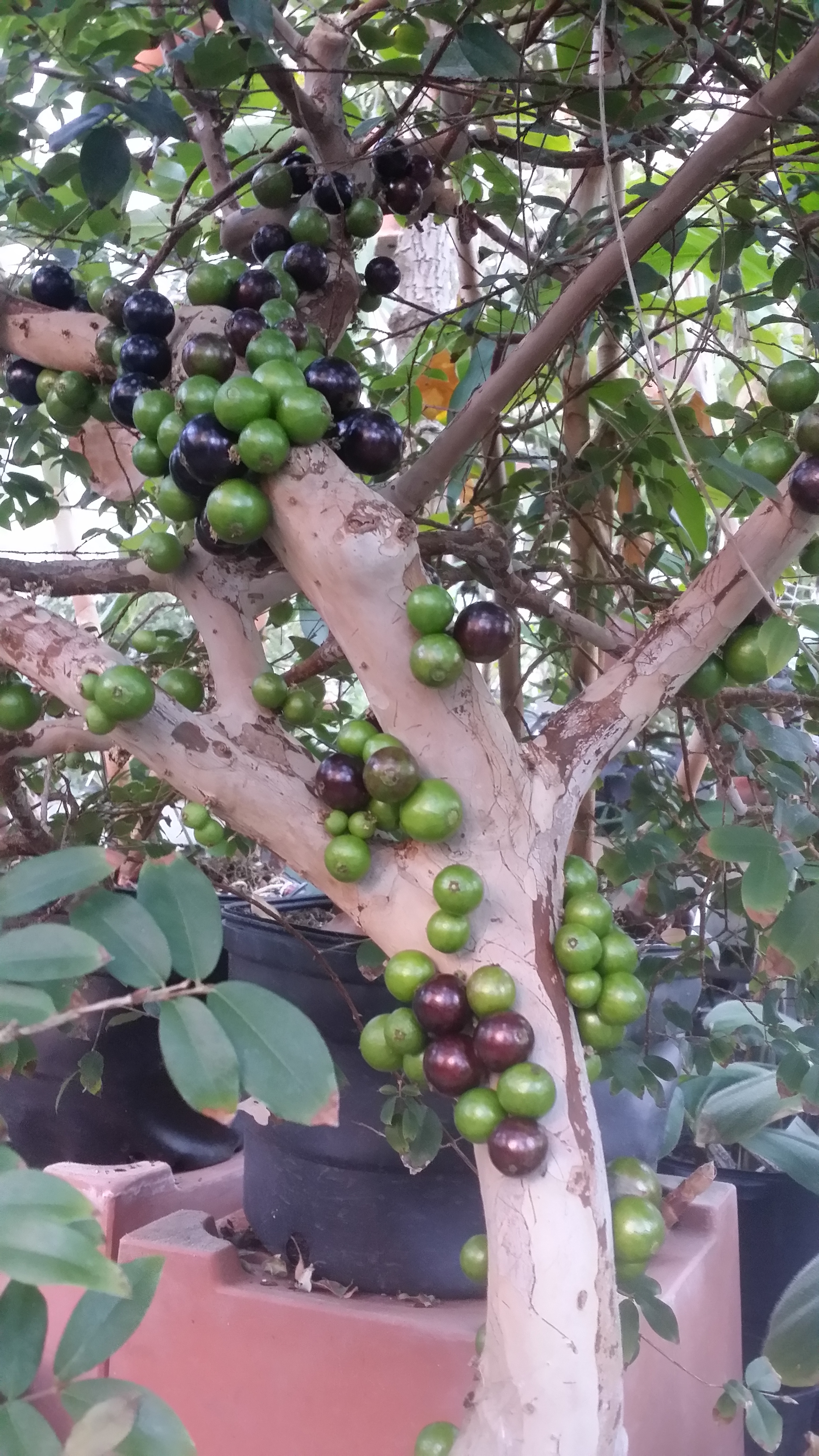
Current Accessions in the Myrtaceae
Subfamily Myrtoideae
Tribe Eucalypteae
Subfamily Myrtoideae
Tribe Leptospermeae
Subfamily Myrtoideae
Tribe Melaleuceae
Subfamily Myrtoideae
Tribe Metrosidereae
Subfamily Myrtoideae
Tribe Myrteae
- Acca sellowiana


- Eugenia brasiliensis
- Eugenia uniflora
- Myrtus communis `Microphylla'
- Pimenta dioica
- Plinia cauliflora
- Psidium cattleianum
- Psidium guajava
- Ugni molinae
Subfamily Myrtoideae
Tribe Syzygieae
Subfamily Psiloxyloideae
Tribe Heteropyxideae
W/C = Wild Collected
 = indicates flowering in past 14 days
= images available for this accession
= map available for this accession
= indicates flowering in past 14 days
= images available for this accession
= map available for this accession
 = accession added within past 90 days