Accession Data:
Brassavola nodosa (L.) Lindl.
- Common Name: Lady of the Night
- Family: Orchidaceae Juss.
- Country of Origin: Mexico to Trop. America
- Description:
- AKA: Epidendrum nodosum L., Brassavola venosa Lindl., B. rhopalorrhachis Reichb. f.
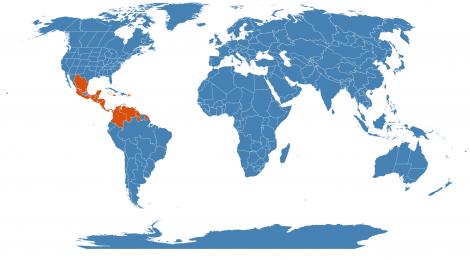
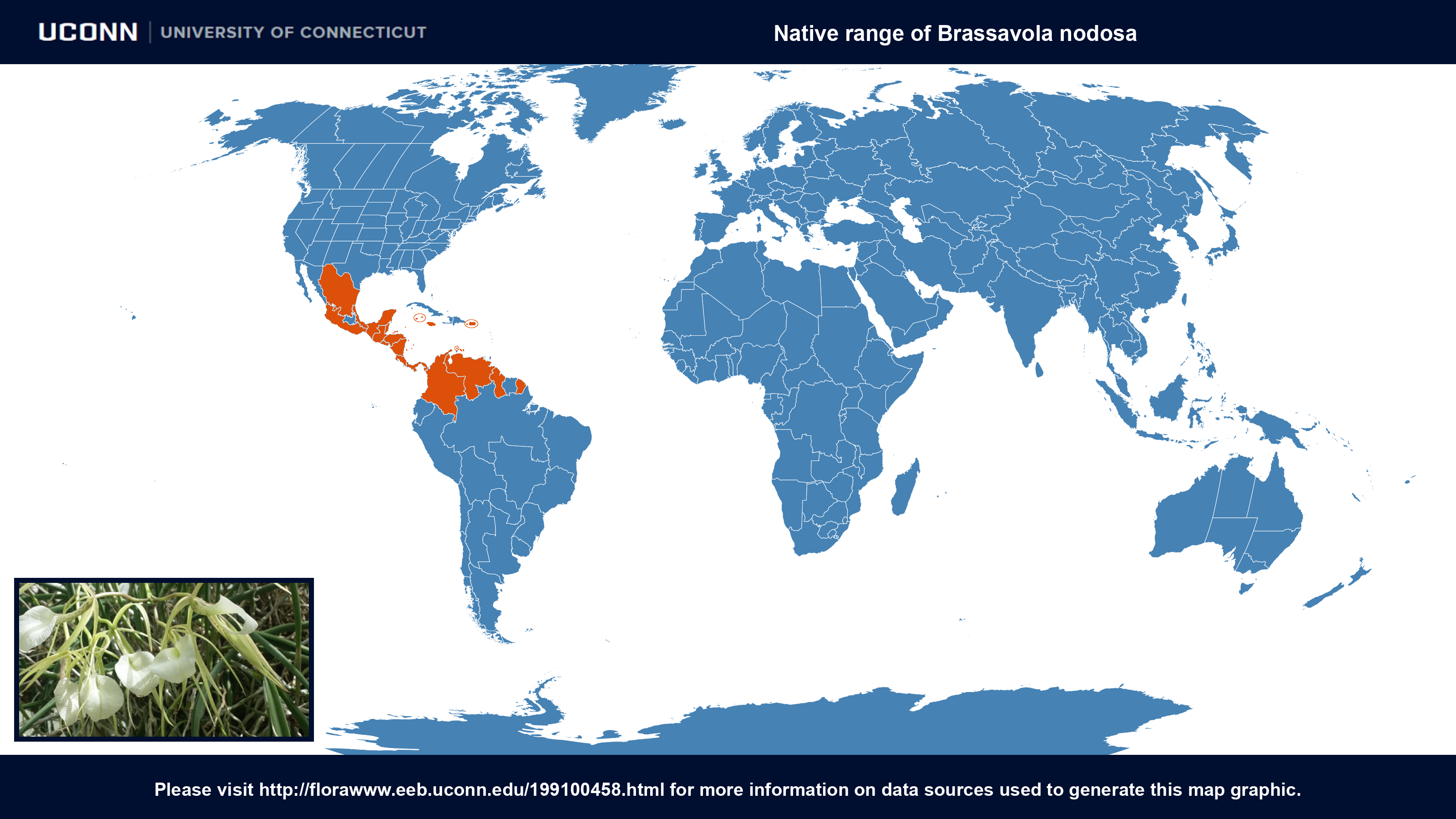
- ORIGIN/HABITAT: Widespread in Mexico along the Gulf of Mexico coast southward from Tampico, with plants also found on the Pacific coast in the state of Chiapas. The habitat continues south through Central America along both the Pacific and Caribbean coasts, and extends into northern Venezuela and Colombia. Collections have also been reported on islands in the West Indies. Plants are found in low lying coastal regions, generally below 1640 ft. (500 m), growing on either trees in lowland tropical forests and mangrove swamps, or on exposed rocks and cliffs near the shore.
- PLANT SIZE AND TYPE: A clump forming epiphyte or lithophyte that may reach a height of 15-18 in. (38-46 cm), but is often shorter. The connecting rhizome between growths is usually short, and established plants tend to start several new growths. Consequently, specimen plants are easily grown.
- PSEUDOBULBS: Instead of pseudobulbs, plants have short slender stems up to 6 in. (15 cm) long that are concealed by scarious tubular sheaths.
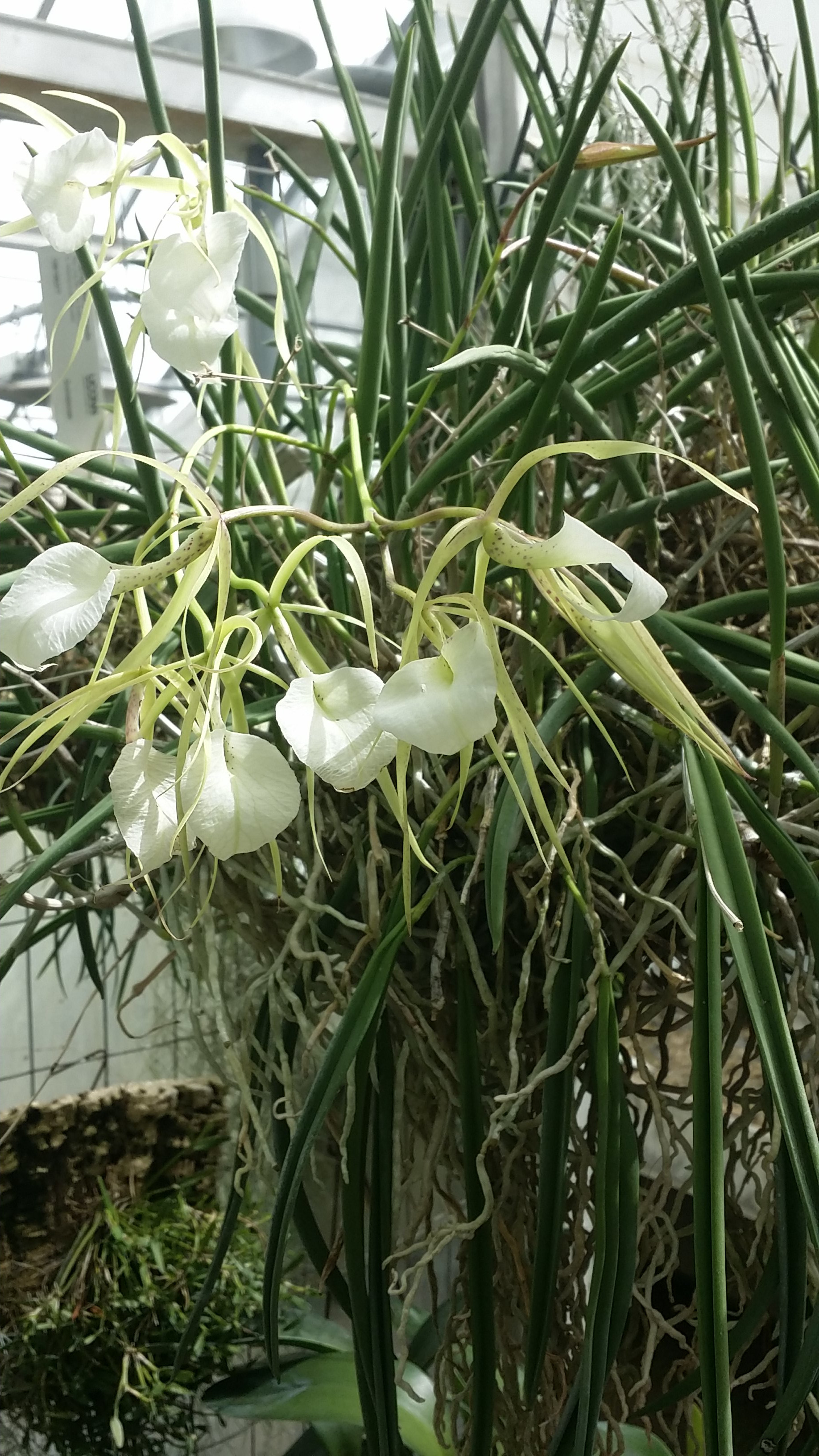
- LEAVES: A single leaf is produced on each growth. Leaves are extremely variable in size and shape, ranging from 4 to 12 in. (10-30 cm) long and from 1/8 to 3/4 in. (0.3-1.8 cm) wide. The grey-green leaves are usually erect, very fleshy, grooved on the upper surface, and often appear subterete or semicylindrical.
- INFLORESCENCE: 1 per growth. The erect inflorescence is about 8 in. (20 cm) long and arise from the leaf axil as the new growth matures.
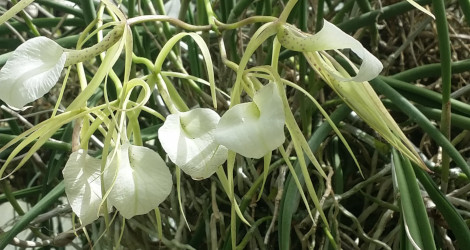
- FLOWERS: 1-6 on each inflorescence. The long-lived flowers, which are very fragrant at night, are usually about 3.5 in. (9 cm) across, but may reach nearly 6 in. (15 cm). Sepals and petals are long and slender, do not spread widely, and vary in color from pale green or yellowish to nearly pure white. The large lip is tubular at the base, then opens opens widely, producing a heart-shaped terminal area that may be as large as 2 in. (5 cm) across. The lip is white and often marked with purple or dark red spotting inside the tube.
- Culture: Plant prefer dry outs when pseudobulbs complete growth. Water about once every week. Fertilize about once every two weeks during growing season. Plant grows in medium to bright light and intermediate to warm temperatures. Pot in perlite and medium bark or in full sphagnum moss. Plant is best grown mounted. 4
Accession Data:
- Accession # 199100458
- Source: Unknown
- Accession Date: 12-31-1991
- Bench: 3219 - ORCH:Nepenthes
- Currently: active - healthy
- Qty: 1 confirmed on 07-03-2025
- Restrictions:
- CITES Appendix II Listed Plant
- CITES Appendix II Listed Plant
Classification:
- Division: Magnoliophyta
- Class: Liliopsida
- SubClass: monocots
- Order: Asparagales
- SubOrder:
- Family: Orchidaceae
- SubFamily: Epidendroideae
- Tribe: Epidendreae
- SubTribe: Laeliinae
Flowering Data:
This accession has been observed in bloom on:| Year | Jan | Feb | Mar | Apr | May | Jun | Jul | Aug | Sep | Oct | Nov | Dec | ||||||||||||||||||||||||||||||||||||||||
|---|---|---|---|---|---|---|---|---|---|---|---|---|---|---|---|---|---|---|---|---|---|---|---|---|---|---|---|---|---|---|---|---|---|---|---|---|---|---|---|---|---|---|---|---|---|---|---|---|---|---|---|---|
| 2025 | ||||||||||||||||||||||||||||||||||||||||||||||||||||
| 2024 | ||||||||||||||||||||||||||||||||||||||||||||||||||||
| 2023 | ||||||||||||||||||||||||||||||||||||||||||||||||||||
| 2022 | ||||||||||||||||||||||||||||||||||||||||||||||||||||
| 2021 | ||||||||||||||||||||||||||||||||||||||||||||||||||||
| 2020 | ||||||||||||||||||||||||||||||||||||||||||||||||||||
| 2019 | ||||||||||||||||||||||||||||||||||||||||||||||||||||
| 2018 | ||||||||||||||||||||||||||||||||||||||||||||||||||||
| 2017 | ||||||||||||||||||||||||||||||||||||||||||||||||||||
| 2016 | ||||||||||||||||||||||||||||||||||||||||||||||||||||
| 2015 | ||||||||||||||||||||||||||||||||||||||||||||||||||||
| 2014 | ||||||||||||||||||||||||||||||||||||||||||||||||||||
| 2013 | ||||||||||||||||||||||||||||||||||||||||||||||||||||
| 2012 | ||||||||||||||||||||||||||||||||||||||||||||||||||||
| 2011 | ||||||||||||||||||||||||||||||||||||||||||||||||||||
| 2010 | ||||||||||||||||||||||||||||||||||||||||||||||||||||
| 2009 | ||||||||||||||||||||||||||||||||||||||||||||||||||||
| 2008 | ||||||||||||||||||||||||||||||||||||||||||||||||||||
| 2007 | ||||||||||||||||||||||||||||||||||||||||||||||||||||
| 2006 | ||||||||||||||||||||||||||||||||||||||||||||||||||||
References (internal):
- EEB Greenhouse Holdings native to: Mexico Northeast / Mexico Gulf / Mexico Southwest / Mexico Southeast / Belize / Costa Rica / El Salvador / Guatemala / Honduras / Nicaragua / Panama / Aruba / Cayman Is. / Jamaica / Netherlands Antilles / Puerto Rico / Southwest Caribbean / French Guiana / Guyana / Venezuela / Colombia
References (external):
- Portions Copyright 1991, Charles and Margaret Baker. Originally printed in The Orchid Hunter, Oct. 1991, and reprinted in the Oregon Orchid Society Bulletin, September 1993.
- The Plant List (2013). Version 1.1. Accessed 8 June 2015.
- WCSP (2015). World Checklist of Selected Plant Families. Facilitated by the Royal Botanic Gardens, Kew. Accessed 8 June 2015
- Brassavola nodosa at Orchids Wiki. Accessed 8 June 2015.
- Brassavola nodosa at Internet Orchid Species Encyclopedia. Accessed 8 June 2015.
data regenerated on Tue, 15 Jul 2025 13:12:50 -0400 [bcm v4.0]
Images:
Additional images for this accession:
Click on thumbnails to enlarge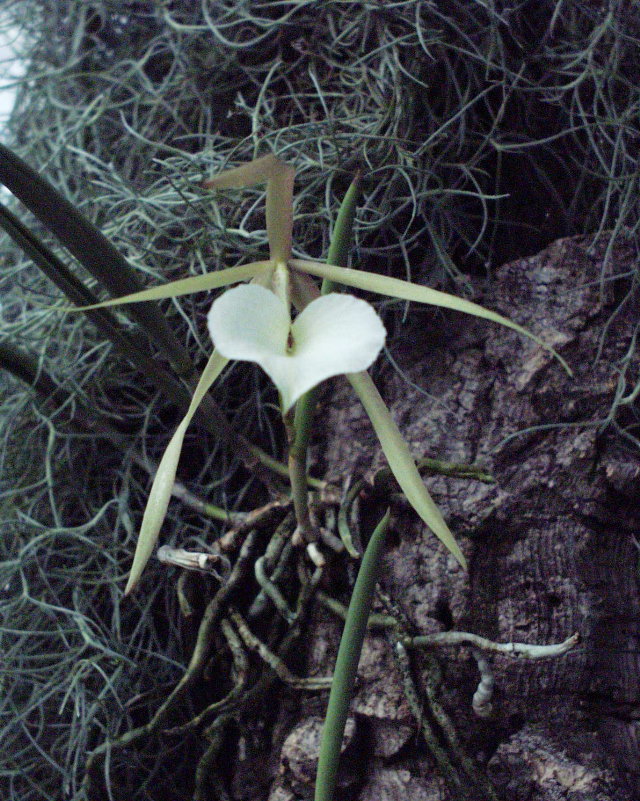
Current Accessions in the Orchidaceae
Subfamily Cypripedioideae
Tribe Cypripedieae
- Paphiopedilinae: Paphiopedilum argus


- Paphiopedilinae: Paphiopedilum delenatii
- Paphiopedilinae: Paphiopedilum delenatii
- Paphiopedilinae: Paphiopedilum Delrosi

- Paphiopedilinae: Paphiopedilum Harrisianum
- Paphiopedilinae: Paphiopedilum haynaldianum
- Paphiopedilinae: Paphiopedilum mastersianum
- Paphiopedilinae: Paphiopedilum niveum
Subfamily Cypripedioideae
Tribe Phragmipedieae
- Phragmipediinae: Phragmipedium besseae
- Phragmipediinae: Phragmipedium Calurum
- Phragmipediinae: Phragmipedium Demetria
- Phragmipediinae: Phragmipedium Schroederae
- Phragmipediinae: Phragmipedium Lemoinierianum
- Phragmipediinae: Phragmipedium Dominianum
- Phragmipediinae: Phragmipedium longifolium
Subfamily Epidendroideae
Tribe Arethuseae
- Bletiinae: Bletilla striata
- Chysinae: Chysis bractescens
- Sobraliinae: Sobralia decora
- Sobraliinae: Sobralia decora x leucantha
Subfamily Epidendroideae
Tribe Coelogyneae
- Coelogyninae: Coelogyne asperata
- Coelogyninae: Coelogyne flaccida
- Coelogyninae: Coelogyne lawrenceana
- Coelogyninae: Coelogyne mayeriana
- Coelogyninae: Coelogyne ovalis
- Coelogyninae: Coelogyne rochussenii
- Coelogyninae: Coelogyne speciosa
- Coelogyninae: Coelogyne tomentosa
- Coelogyninae: Coelogyne usitana
- Coelogyninae: Dendrochilum cobbianum
- Coelogyninae: Dendrochilum magnum
- Coelogyninae: Dendrochilum sp.
- Coelogyninae: Dendrochilum wenzelii
- Coelogyninae: Dendrochilum yuccifolium
- Coelogyninae: Pholidota imbricata
- Thuniinae: Thunia alba
Subfamily Epidendroideae
Tribe Collabieae
Subfamily Epidendroideae
Tribe Cymbidieae
- Catasetinae: Catasetum fimbriatum var. morrenianum
- Catasetinae: Catasetum hybrid
- Catasetinae: Catasetum hybrid
- Catasetinae: Catasetum hybrid
- Catasetinae: Catasetum pileatum
- Cymbidiinae: Cymbidium aloifolium
- Cymbidiinae: Cymbidium dayanum 'Bolin'
- Cymbidiinae: Cymbidium finlaysonianum
- Cymbidiinae: Cymbidium sp.
- Eulophiinae: Eulophia andamanensis
- Eulophiinae: Eulophia guineensis
- Eulophiinae: Eulophia petersii
- Maxillariinae: Bifrenaria inodora
- Maxillariinae: Brasiliorchis schunkeana
- Maxillariinae: Maxillaria callichroma
- Maxillariinae: Maxillaria elatior
- Maxillariinae: Maxillaria houtteana
- Maxillariinae: Maxillaria pachyphylla
- Maxillariinae: Maxillaria sanguinea
- Maxillariinae: Prominaea stapelioides x guttata
- Maxillariinae: Maxillaria tenuifolia
- Maxillariinae: Maxillaria variabilis
- Maxillariinae: Mormolyca hedwigiae
- Maxillariinae: Mormolyca ringens
- Maxillariinae: Mormolyca rufescens
- Maxillariinae: Ornithidium sophronitis
- Maxillariinae: Trigonidium egertonianum
- Oncidiinae: Brassia jipijapensis
- Oncidiinae: Brassia maculata majus
- Oncidiinae: Brassia verrucosa
- Oncidiinae: Lockhartia lunifera
- Oncidiinae: Lockhartia oerstedii
- Oncidiinae: Lockhartia oerstedii
- Oncidiinae: Miltonia clowesii
- Oncidiinae: Miltonia flavescens
- Oncidiinae: Oncidium altissimum
- Oncidiinae: Oncidium hybrid
- Oncidiinae: Oncidium hybrid
- Oncidiinae: Oncidium maculatum
- Oncidiinae: Oncidium sphacelatum
- Oncidiinae: Oncidium tigrinum
- Oncidiinae: Oncidium unidentified
- Stanhopeinae: Gongora cassidea
- Stanhopeinae: Gongora histrionica
- Stanhopeinae: Gongora quinquenervis var uncinata
- Stanhopeinae: Gongora rufescens
- Stanhopeinae: Gongora scaphephorus
- Stanhopeinae: Stanhopea assidensis (tigrina x wardii)
- Stanhopeinae: Stanhopea costaricensis
- Stanhopeinae: Stanhopea ecornuta
- Stanhopeinae: Stanhopea grandiflora
- Stanhopeinae: Stanhopea graveolens
- Stanhopeinae: Stanhopea intermedia
- Stanhopeinae: Stanhopea jenischiana
- Stanhopeinae: Stanhopea lietzei
- Stanhopeinae: Stanhopea oculata
- Stanhopeinae: Stanhopea platyceras
- Stanhopeinae: Stanhopea tigrina
- Stanhopeinae: Stanhopea tigrina var. nigroviolacea
- Stanhopeinae: Stanhopea tigrina x wardii
- Stanhopeinae: Stanhopea wardii
- Zygopetalinae: Pescatoria wallisii
- Zygopetalinae: Zygopetalum maculatum
Subfamily Epidendroideae
Tribe Dendrobieae
- Bulbophyllinae: Bulbophyllum affine
- Bulbophyllinae: Bulbophyllum affine
- Bulbophyllinae: Bulbophyllum annamense
- Bulbophyllinae: Bulbophyllum careyanum
- Bulbophyllinae: Bulbophyllum cheiri
- Bulbophyllinae: Bulbophyllum corolliferum
- Bulbophyllinae: Bulbophyllum echinolabium
- Bulbophyllinae: Bulbophyllum elegantulum
- Bulbophyllinae: Bulbophyllum falcatum
- Bulbophyllinae: Bulbophyllum flammuliferum
- Bulbophyllinae: Bulbophyllum gibbosum
- Bulbophyllinae: Bulbophyllum gibbosum
- Bulbophyllinae: Bulbophyllum grandiflorum
- Bulbophyllinae: Bulbophyllum hahlianum
- Bulbophyllinae: Bulbophyllum lasiochilum
- Bulbophyllinae: Bulbophyllum lepidum
- Bulbophyllinae: Bulbophyllum lepidum
- Bulbophyllinae: Bulbophyllum lepidum
- Bulbophyllinae: Bulbophyllum lilacinum
- Bulbophyllinae: Bulbophyllum lobbii
- Bulbophyllinae: Bulbophyllum longiflorum
- Bulbophyllinae: Bulbophyllum longissimum
- Bulbophyllinae: Bulbophyllum morotaiense
- Bulbophyllinae: Bulbophyllum purpureorhachis
- Bulbophyllinae: Bulbophyllum roxburghii
- Bulbophyllinae: Bulbophyllum roxburghii
- Bulbophyllinae: Bulbophyllum tremulum
- Bulbophyllinae: Bulbophyllum vaginatum
- Dendrobiinae: Dendrobium anceps
- Dendrobiinae: Dendrobium anosmum
- Dendrobiinae: Dendrobium aphyllum
- Dendrobiinae: Dendrobium bifalce
- Dendrobiinae: Dendrobium bigibbum
- Dendrobiinae: Dendrobium brunneum
- Dendrobiinae: Dendrobium chrysotropis
- Dendrobiinae: Dendrobium x delicatum
- Dendrobiinae: Dendrobium farmeri
- Dendrobiinae: Dendrobium hymenanthum
- Dendrobiinae: Dendrobium jenkinsii
- Dendrobiinae: Dendrobium kingianum
- Dendrobiinae: Dendrobium lindleyi
- Dendrobiinae: Dendrobium lindleyi
- Dendrobiinae: Dendrobium moniliforme
- Dendrobiinae: Dendrobium nakaharae
- Dendrobiinae: Dendrobium plicatile
- Dendrobiinae: Dendrobium rigidum
- Dendrobiinae: Dendrobium speciosum var. hillii
- Dendrobiinae: Dendrobium speciosum var. pedunculatum
- Dendrobiinae: Dendrobium wassellii
Subfamily Epidendroideae
Tribe Epidendreae
- Glomerinae: Agrostophyllum planicaule
- Laeliinae: Barkeria melanocaulon
- Laeliinae: Brassavola cucullata
- Laeliinae: Brassavola nodosa
- Laeliinae: Brassocattleya hybrid
- Laeliinae: Cattleya luteola
- Laeliinae: Cattleya mossiae f. coerulea
- Laeliinae: Caularthron bicornutum
- Laeliinae: Dinema polybulbon
- Laeliinae: Encyclia unidentified
- Laeliinae: Epidendrum 'Max Valley'
- Laeliinae: Epidendrum oerstedii
- Laeliinae: Epidendrum radicans
- Laeliinae: Epidendrum rigidum
- Laeliinae: Epidendrum schlecterianum
- Laeliinae: Guarianthe bowringiana
- Laeliinae: Isabelia pulchella
- Laeliinae: Isochilus carnosiflorus
- Laeliinae: Laelia rubescens
- Laeliinae: Laelia tenebrosa
- Laeliinae: Myrmecophila christinae

- Laeliinae: Myrmecophila tibicinis
- Laeliinae: Scaphyglottis confusa
- Laeliinae: Scaphyglottis longicaulis
- Pleurothallidinae: Acianthera casapensis
- Pleurothallidinae: Anathallis linearifolia 'D&M'
- Pleurothallidinae: Dracula pusilla
- Pleurothallidinae: Masdevallia hybrid
- Pleurothallidinae: Masdevallia infracta
- Pleurothallidinae: Myoxanthus affinis
- Pleurothallidinae: Octomeria unidentified
- Pleurothallidinae: Pleurothallis longipedicellata
- Pleurothallidinae: Pleurothallis nuda
- Pleurothallidinae: Pleurothallis pedunculata
- Pleurothallidinae: Pleurothallis prolaticollaris
- Pleurothallidinae: Pleurothallis titan
- Pleurothallidinae: Pleurothallis truncata
- Pleurothallidinae: Pleurothallis unidentified
- Pleurothallidinae: Pleurothallis unidentified
- Pleurothallidinae: Restrepiella ophiocephala
- Pleurothallidinae: Specklinia brighamii
- Pleurothallidinae: Specklinia grobyi
- Pleurothallidinae: Specklinia tribuloides
- Pleurothallidinae: Stelis argentata
- Pleurothallidinae: Stelis argentata
- Pleurothallidinae: Stelis immersa
- Pleurothallidinae: Stelis megachlamys
- Pleurothallidinae: Stelis quadrifida
- Pleurothallidinae: Trichosalpinx chamaelepanthes
- Pleurothallidinae: Zootrophion hirtzii
Subfamily Epidendroideae
Tribe Malaxideae
Subfamily Epidendroideae
Tribe Podochileae
- Eriinae: Ceratostylis retisquama
- Eriinae: Eria carinata
- Eriinae: Campanulorchis globifera
- Eriinae: Eria javanica
- Eriinae: Mediocalcar decoratum
- Eriinae: Pinalia bractescens
- Eriinae: Pinalia copelandii
- Eriinae: Trichotosia velutina
Subfamily Epidendroideae
Tribe Vandeae
- Aerangidinae: Diaphananthe pellucida
- Aerangidinae: Microterangis hariotiana
- Aeridinae: Cleisocentron gokusingii
- Aeridinae: Phalaenopsis lueddemanniana
- Aeridinae: Robiquetia cerina
- Aeridinae: Sarcochilus hartmannii
- Aeridinae: Tuberolabium kotoense
- Aeridinae: Rhynchorides Thai Noi
- Aeridinae: Vanda tricolor var. suavis
- Angraecinae: Angraecum distichum
- Angraecinae: Angraecum sesquipedale
- Angraecinae: Jumellea arachnantha
- Polystachyinae: Neobenthamia gracilis
Subfamily Orchidoideae
Tribe Cranchideae
- Cranchidinae: Cladobium graminifolium
Subfamily Orchidoideae
Tribe Cranichideae
- Goodyerinae: Goodyera pubescens
- Goodyerinae: Ludisia discolor
- Prescottiinae: Prescottia plantaginifolia
Subfamily Orchidoideae
Tribe Diseae
- Satyriinae: Cynorkis calanthoides
- Satyriinae: Satyrium membranaceum
Subfamily Orchidoideae
Tribe Orchideae
- Orchidinae: Habenaria medusa
Subfamily Vanilloideae
Tribe Vanilleae
- Vanilla phalaenopsis
- Vanilla planifolia
- Vanilla planifolia variegata
- Vanilla pompona
- Vanilla roscheri
 = indicates flowering in past 14 days
= images available for this accession
= map available for this accession
= indicates flowering in past 14 days
= images available for this accession
= map available for this accession
 = accession added within past 90 days